
What I Saw at KBIS… And Why It Matters for Your Remodel
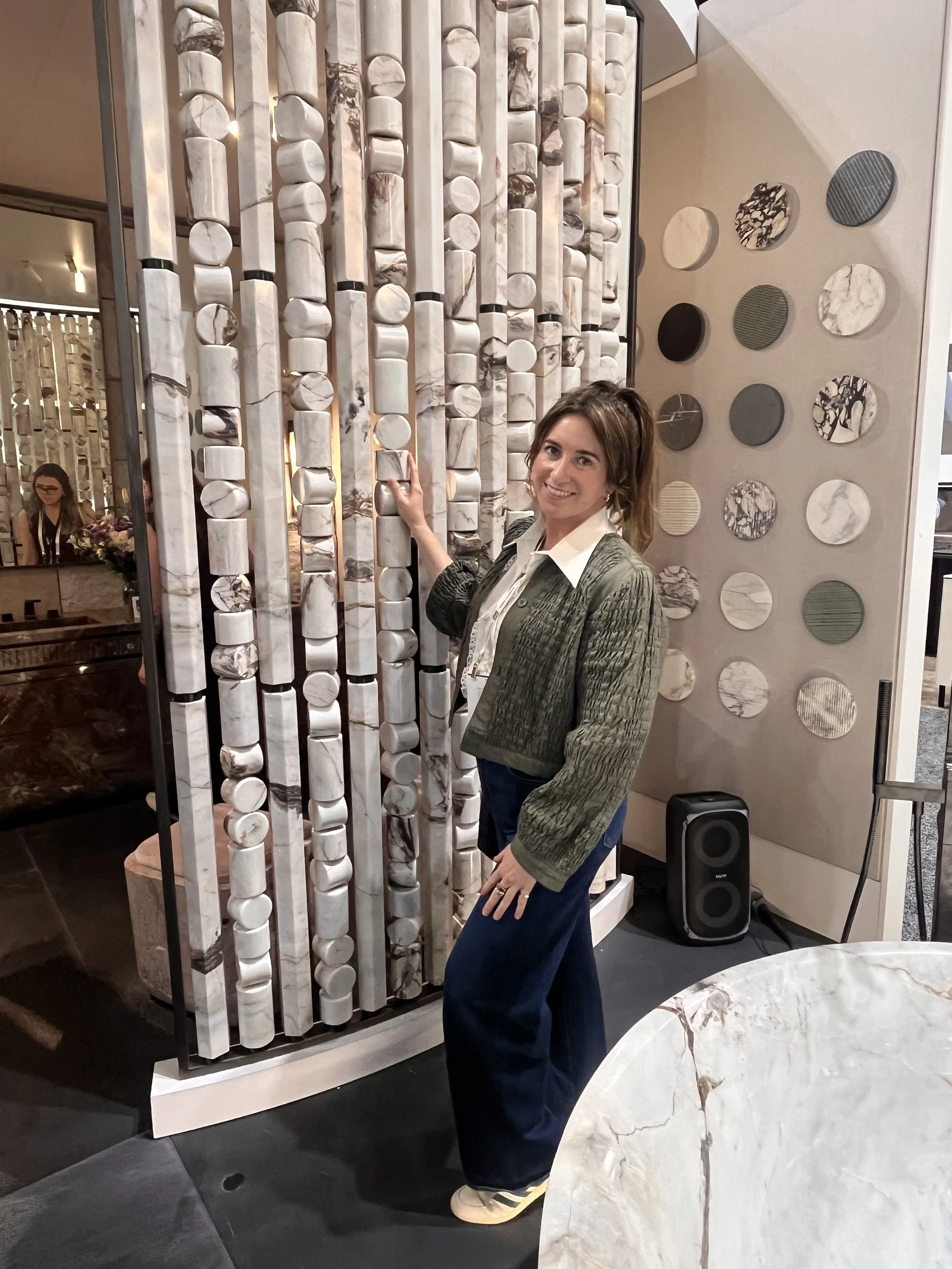
If you’re planning a remodel, you might not be thinking about what’s happening at a national design conference…
But I am.
Because what shows up there eventually makes its way into homes in Redondo Beach, Manhattan Beach, Palos Verdes, Westchester, Culver City, and across Los Angeles.
And part of my job is knowing what’s worth bringing into your home… and what’s not.
How I Ended Up at KBIS
Sometimes the best opportunities aren’t planned… they just stick with you.
Last year, I attended a design conference in Orange County and heard LuAnn Nigara speak. She focuses on how to run a successful interior design business, and something about her approach stayed with me.
After that, I subscribed to her emails.
But the story actually started years before that.
I was on vacation in Greece… what is now one of my favorite places in the world… and I asked our tour guide where his favorite place he had ever been was.
Standing there in Greece, he said:
Sarasota, Florida.
It stuck with me.
So when LuAnn sent out an email about a Designhounds retreat in Sarasota… I noticed. And when I realized it was happening alongside KBIS, the largest kitchen and bath conference in North America… I signed up for both.
What Being a Designhounds Member Means for You, My Clients
At KBIS, I attended as part of Designhounds… a group of designers who document what’s happening in the industry in real time.
But here’s the important part.
I’m not just going for inspiration.
I’m going to filter.
There are thousands of products, materials, and ideas being introduced… and not all of them should end up in your home.
My role is to:
Find what’s actually worth using
Understand how it performs in real life
Think about where it fits in a home
Protect you from choices that won’t age well
That’s what client advocacy looks like in design.
Quick Answer: What Trends from KBIS Actually Matter for Your Home?
The most valuable takeaways from KBIS are not trends, but materials and products that are timeless, functional, and adaptable to real homes. The best design decisions come from filtering what is new through what will last.
What I Kept Coming Back To… Stone
Out of everything I saw, I kept coming back to one material…
Stone.
Not just in the way we’re used to seeing it… but in new applications that make it more flexible, more architectural, and more integrated into the overall design of a home.
Here are a few of the standouts.
Sculptural Stone as a Divider
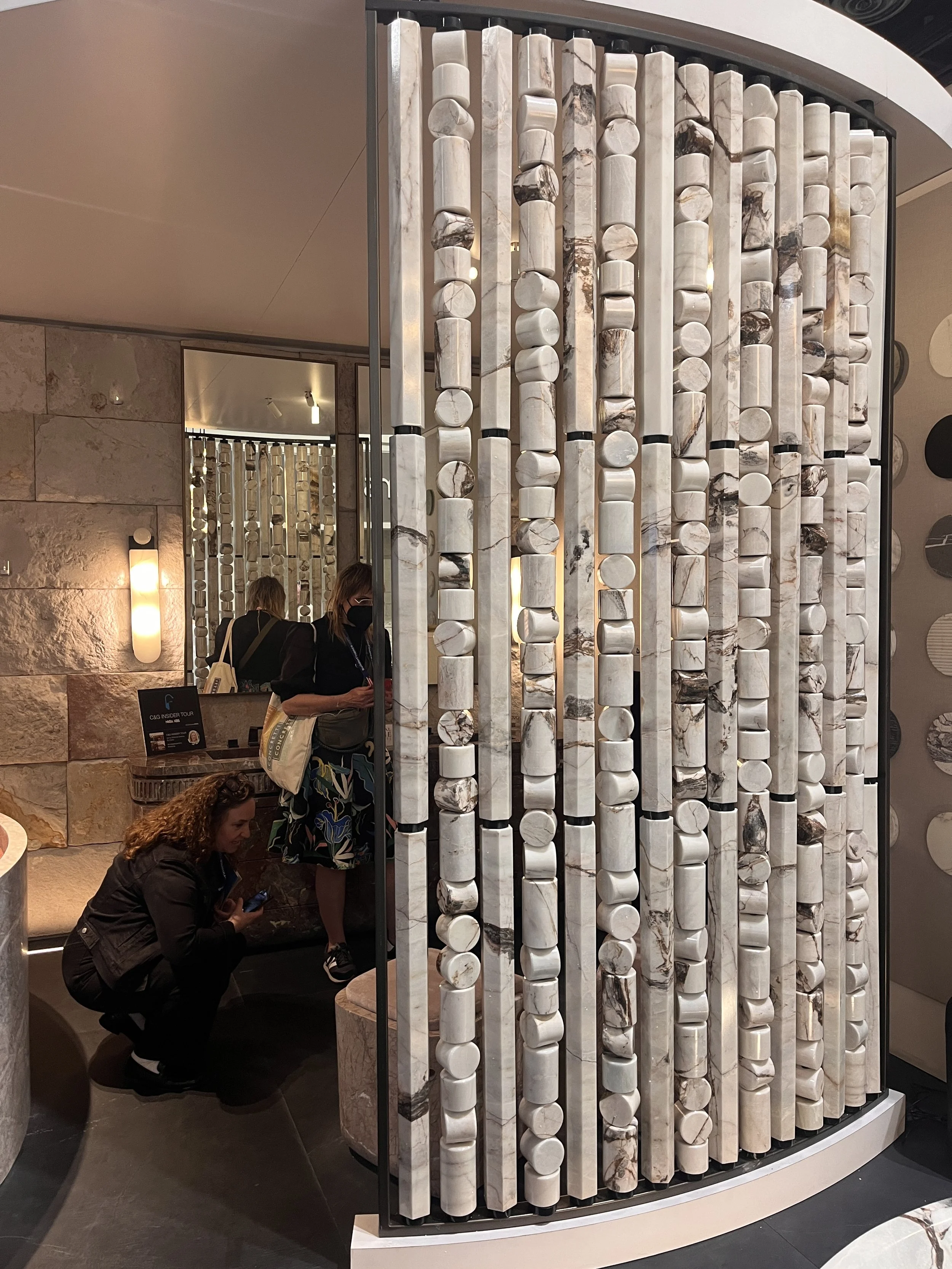
This sculptural stone installation immediately stood out.
Instead of a flat application, it uses vertical stone pieces… some rounded, some more linear… to create depth and movement.
It feels architectural, not just decorative.
Where I would use it:
As a room divider
As a stair railing feature
In an entry moment
It separates space without closing it off and lets light in… which is something I’m always thinking about in remodels.
Patterned Stone That Feels Custom
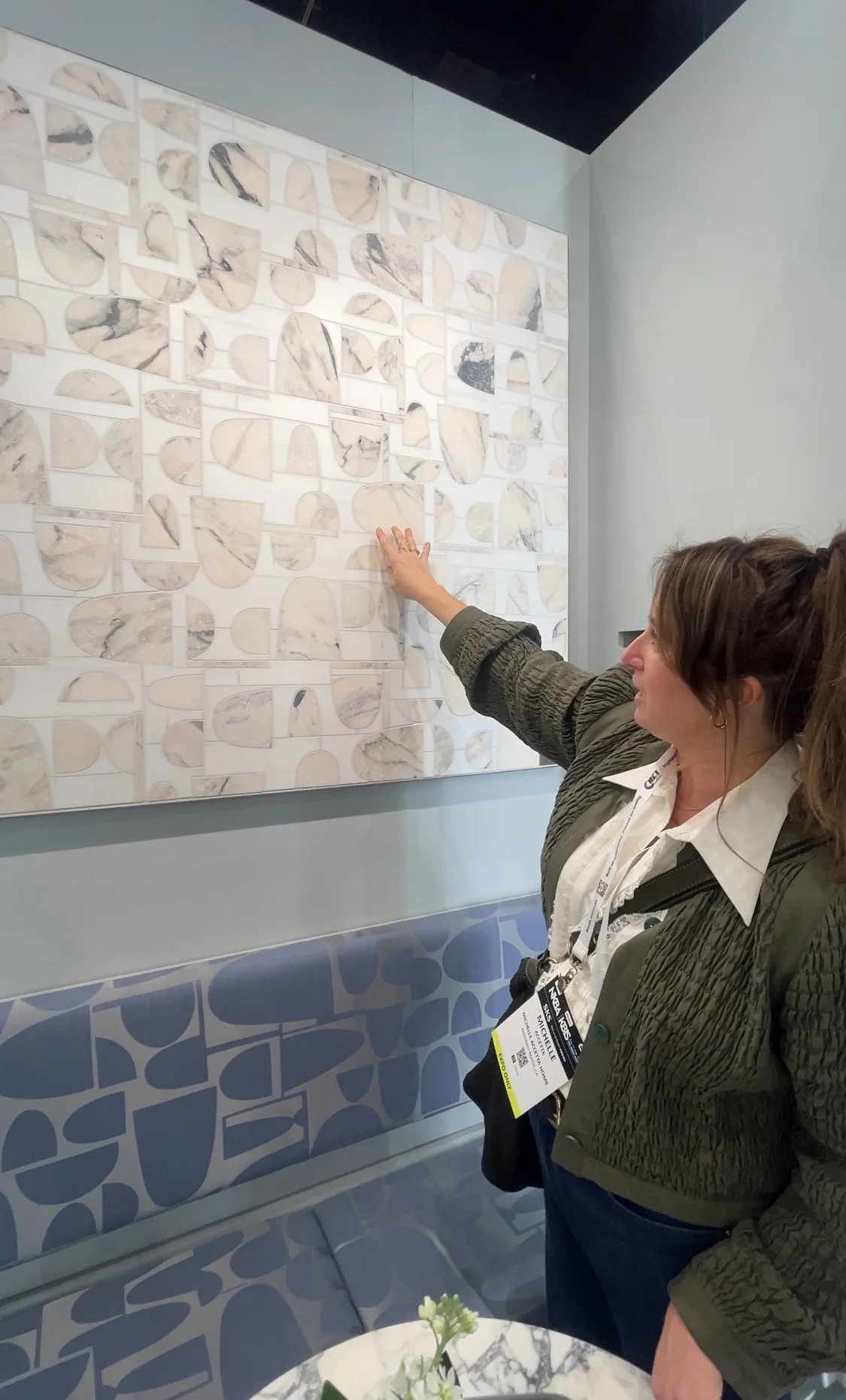
This uniquely patterned stone tile felt like a custom installation.
The mix of curves and geometry gives it movement without feeling overly busy and can be customized with different stones within the pattern.
Where I would use it:
Bathroom floors
Powder rooms
Shower details
Entry or mudroom flooring
It’s a way to bring personality into a space… without overwhelming it.
Outdoor Fire Features That Feel Like Furniture
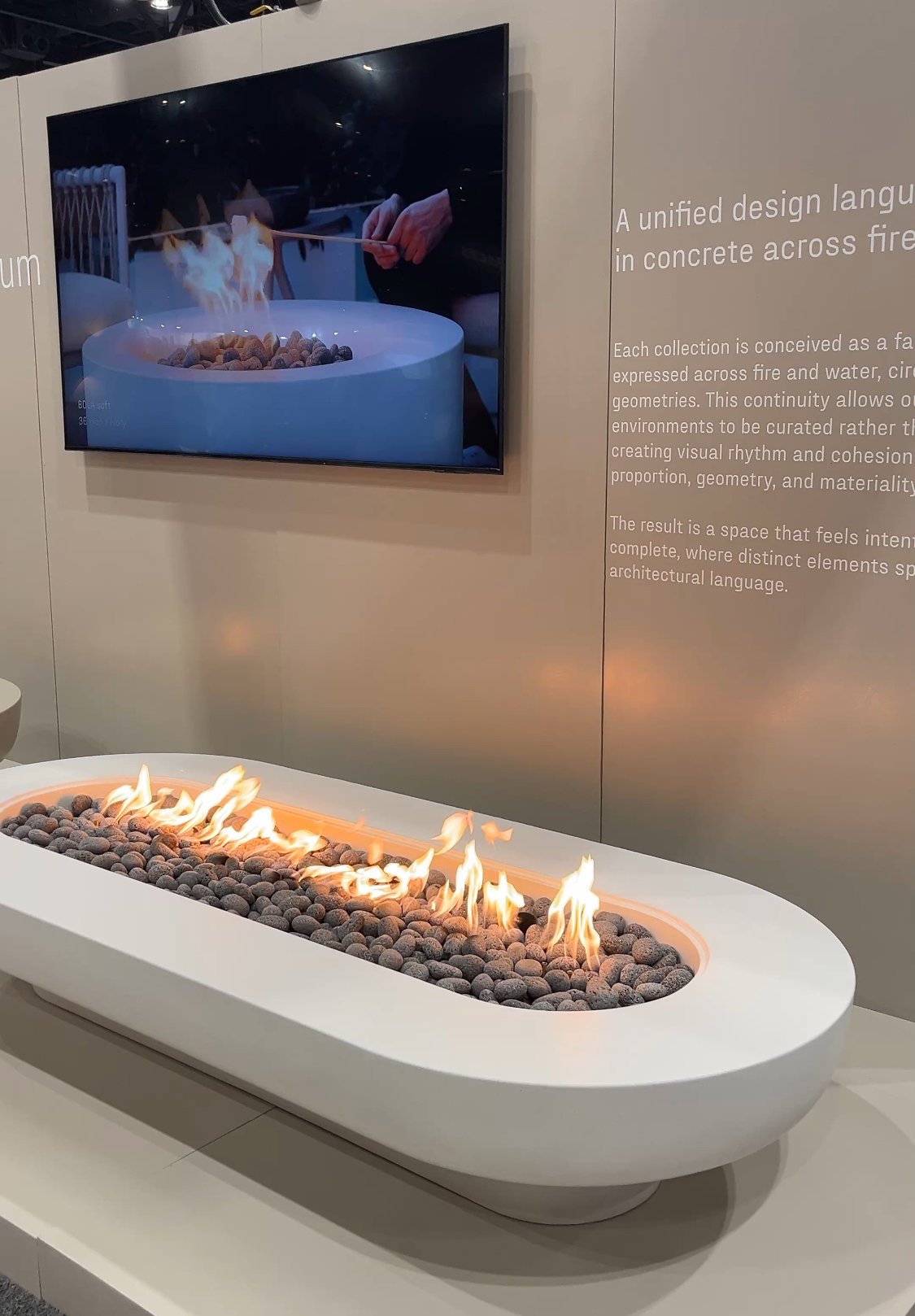
These outdoor concrete fire features felt more like sculpture than a typical fire pit.
Clean, minimal, and intentional.
Where I would use it:
Rooftop decks in Manhattan Beach
Backyards with a view in Palos Verdes
Outdoor living spaces in Los Angeles
They create a natural gathering point without competing with the architecture or the view.
Custom Fireplace Boxes That Elevate the Entire Room
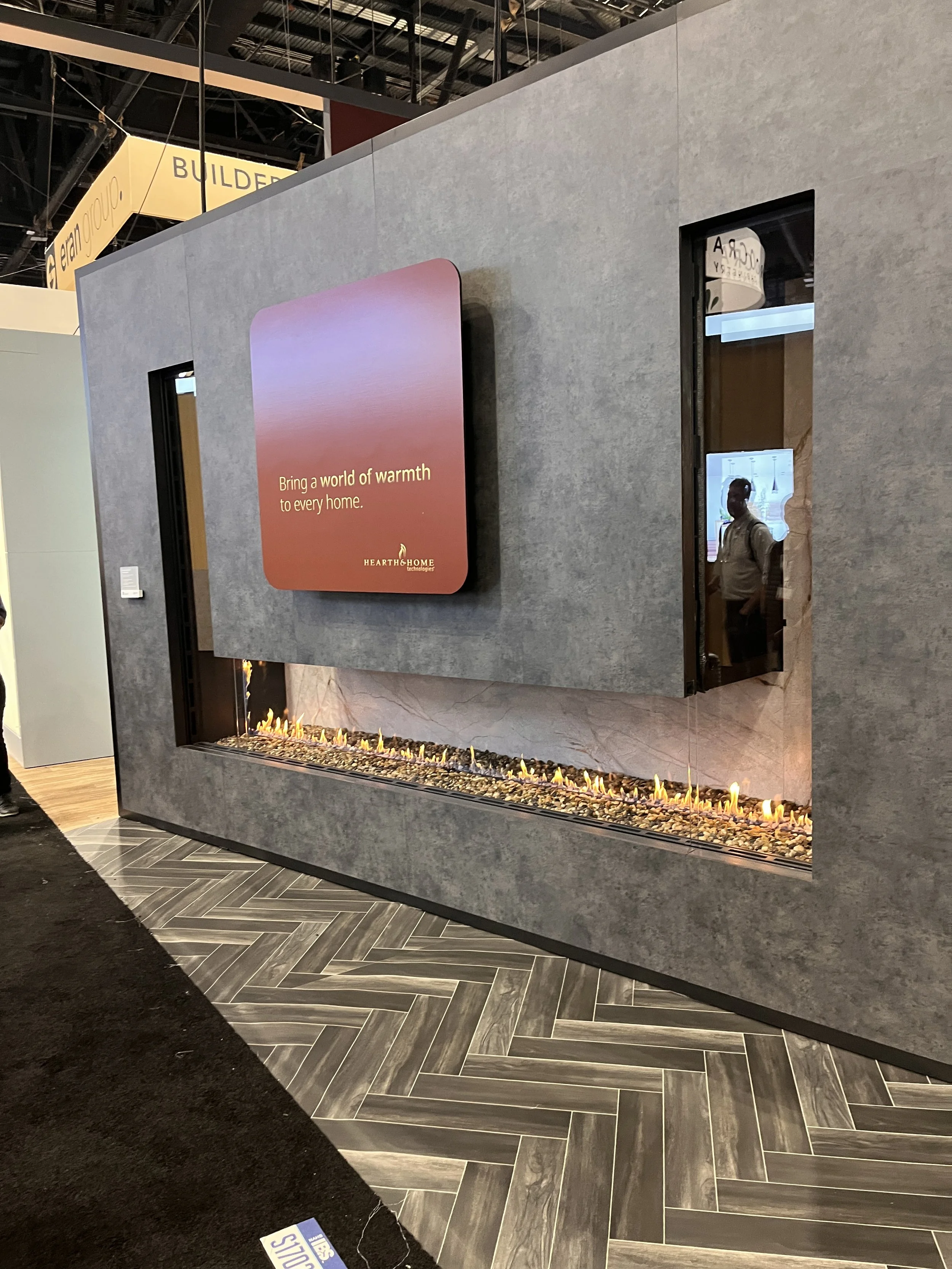
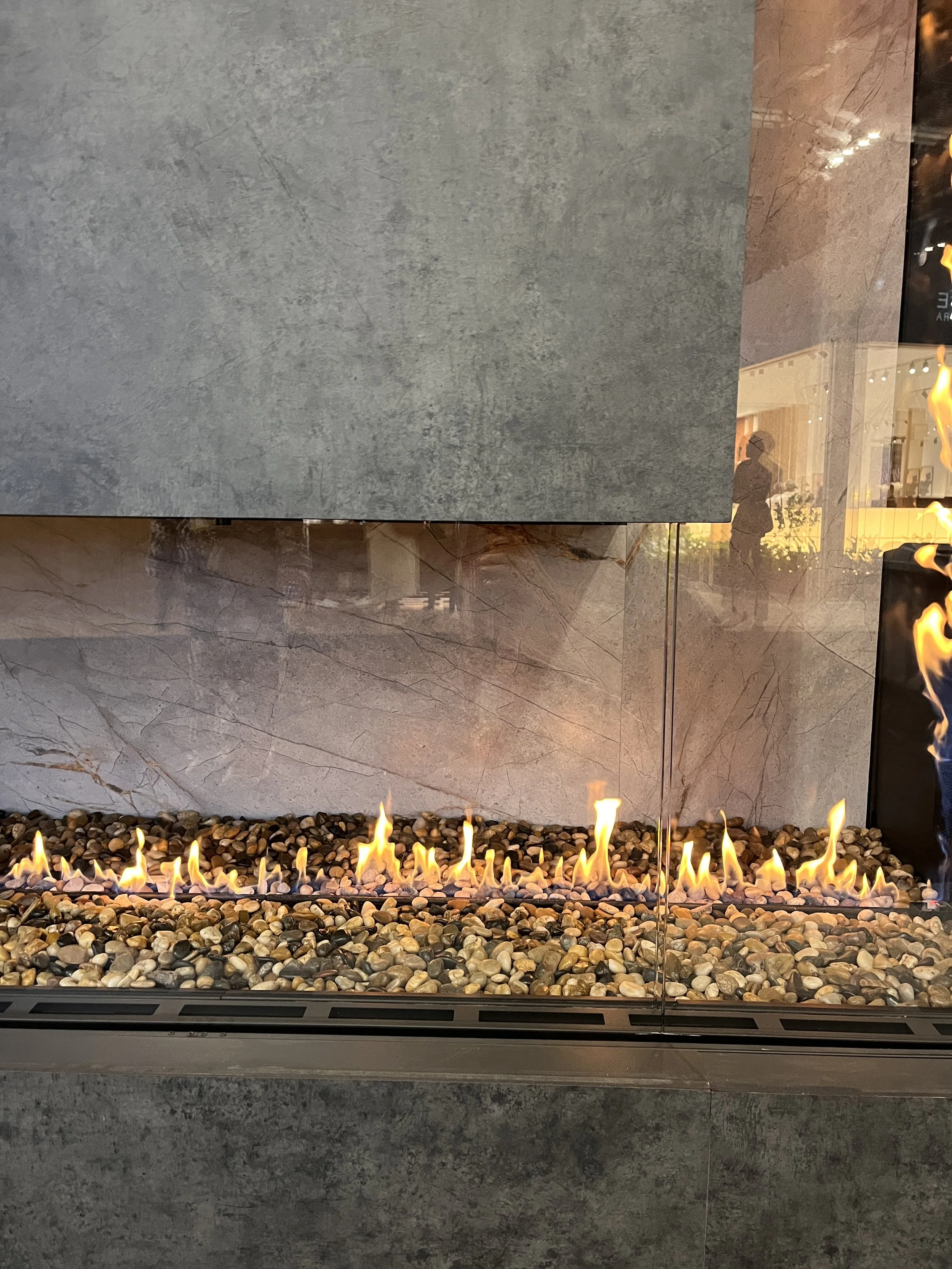
These fireplace boxes stood out because of one detail…
You can customize the interior material.
Instead of a standard black box, you can bring in stone/porcelain finishes that tie into the rest of the home into the firebox backing.
That small detail makes the entire fireplace feel elevated and custom.
Thin Stone Veneer That Expands What’s Possible

This thin stone veneer was one of the most exciting things I saw
It gives you the look of large-scale stone… but without the weight and limitations of full slabs.
Where I would use it:
Circular stairwells
Entry walls
Curved architectural features
It creates a high-end look in places where it normally wouldn’t be possible with thick slabs of stone.
Why This Matters for Your Remodel
Most homeowners don’t have access to this level of product knowledge.
And even if they do, it’s hard to know what actually makes sense to use.
That’s where I come in.
My role is not just to design something that looks good… it’s to make sure every decision:
works in your home
aligns with how you live
and holds up over time
Because the goal isn’t just a beautiful space.
It’s a space that feels intentional, functional, and lasting.
Planning a Remodel in the South Bay or Los Angeles?
If you’re remodeling in Redondo Beach, Manhattan Beach, Palos Verdes, Westchester, Culver City, or Los Angeles…
The materials you choose and the decisions you make early on will shape everything.
Book a design consultation and let’s create a plan that brings your space together intentionally.
FAQ’s
What is KBIS and why does it matter for homeowners?
KBIS (Kitchen & Bath Industry Show) is the largest kitchen and bath trade show in North America. It showcases new materials, products, and design innovations that often influence residential remodels.
What design trends from KBIS are actually worth using?
The most valuable takeaways are materials and applications that are timeless and functional, such as innovative uses of stone, custom fireplace features, and adaptable materials like thin stone veneer.
How can new materials improve a home remodel?
New materials can expand what is possible in a home, allowing for better design solutions, improved functionality, and more customized details that make a space feel intentional.
Should homeowners follow design trends from KBIS?
Not all trends are worth following. A designer helps filter what will work long-term and what fits your specific home, preventing costly or short-lived design decisions.
Why is working with a designer important during a remodel?
A designer helps guide decisions, avoid mistakes, and ensure the final result is cohesive, functional, and aligned with your lifestyle.
