
Why “Decorated, Not Cluttered” Is the Secret to Elevated Interiors
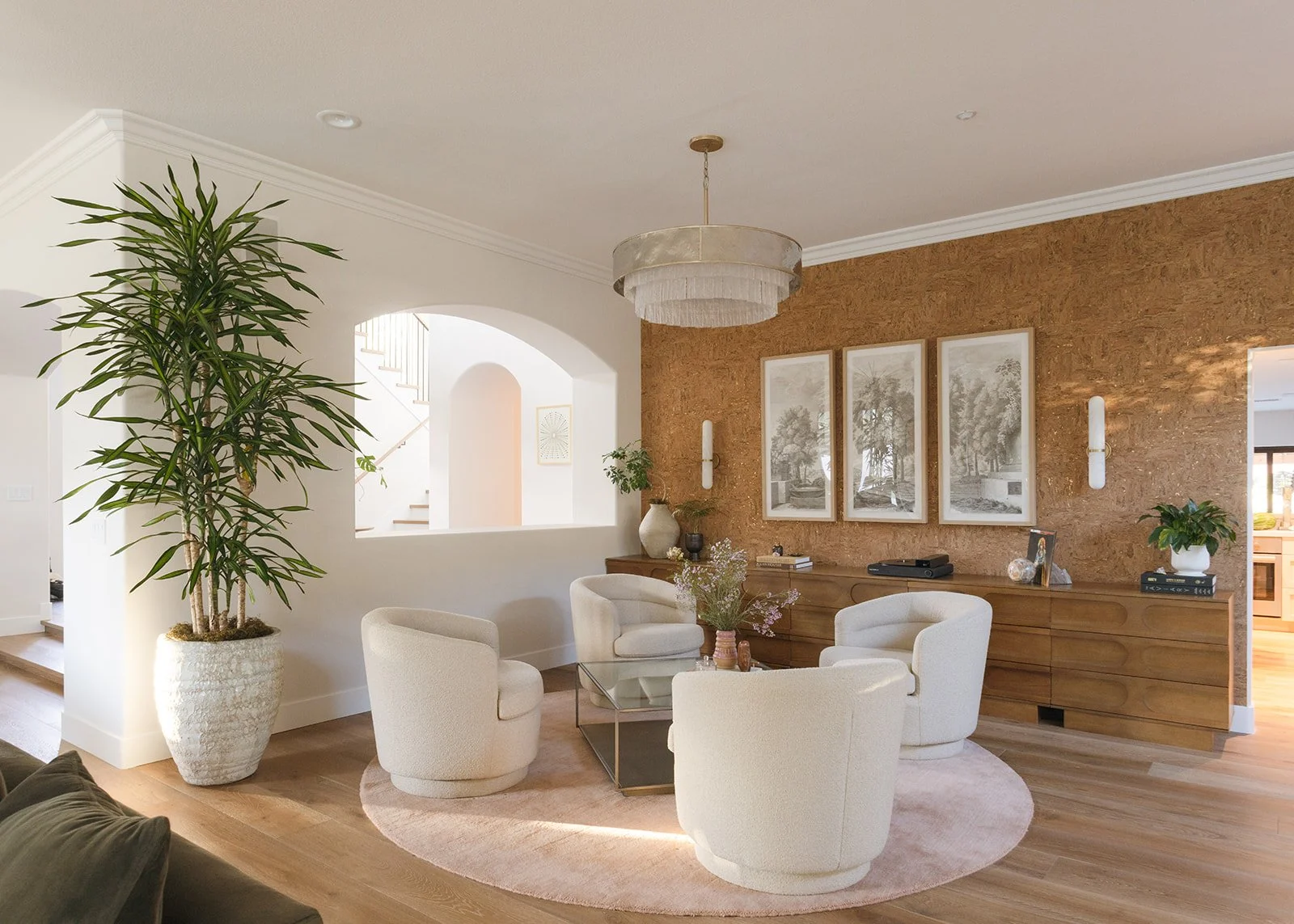
There is a big difference between a home that is decorated and a home that is cluttered.
The difference is intention.
Many of my clients have beautiful treasures they have collected over time. Art. Ceramics. Travel pieces. Heirlooms. The problem is not the items themselves. The problem is what happens when everything is displayed at once.
When everything is out, nothing stands out.
Elevated interiors are not about having fewer meaningful pieces. They are about editing so the right pieces have space to shine.
What “Decorated, Not Cluttered” Really Means
To me, decorated but not cluttered means editing out what does not belong.
It means negative space. Visual breathing room. Intentional placement.
A room feels cluttered when there is no negative space and items are layered in an unintentional way. When accessories are bunched together at the same height. When every wall is filled. When every surface is covered.
Clutter is not about how much you own.
It is about lack of hierarchy.
The Most Common Styling Mistakes
There are a few patterns I see repeatedly:
Too many small accessories grouped together.
No variation in scale or height.
Too many focal points competing for attention.
Furniture layouts that disrupt clear traffic flow.
When I walk into a room and feel visual stress, it is usually because there is nowhere for the eye to rest. No clear countertop. No clean stretch of wall. No moment of pause.
Negative space allows everything else to feel stronger.
The Open Shelving Trap
One of the most common contributors to visual clutter is excessive open shelving.
Open shelving looks beautiful in photos. But in real life, it requires constant curation.
When everything is visible, everything becomes part of the design. Everyday items that are not styled intentionally start to compete for attention. Visual noise builds quickly.
I am very intentional about using closed storage in the furniture I select, in built ins, and in the kitchens I design. Minimal open shelving can work when it is purposeful and restrained. But when it dominates a space, clutter is almost inevitable.
Closed storage creates breathing room. It allows the design moments to stand out instead of forcing everything to perform at once.
Storage is part of styling.
Why Clutter Lowers Perceived Value
From a real estate perspective, clutter affects more than aesthetics.
Cluttered design lowers perceived value because buyers have a harder time visually moving themselves into the space. Their focus becomes scattered. They cannot understand what the room is supposed to be.
It also makes homes feel smaller.
In the South Bay, where buyers are discerning and homes are significant investments, clarity and cohesion matter. A well edited interior feels intentional. A cluttered one feels unresolved.
What Makes a Space Feel Elevated
Elevation comes from restraint and balance.
Fewer, better pieces.
Oversized accessories instead of many small ones.
Variation in height and dimension.
Texture layered intentionally. I love mixing stone, antique bronze, and ceramics. Natural materials add depth without chaos.
Scale matters. Larger pieces create impact. Repetition creates cohesion.
When you balance texture, contrast, and weight, the room feels composed rather than busy.
Editing With Intention
When I style a space, I always start with what the client already has.
Some of the best pieces are hidden in plain sight. A second set of eyes can often identify something extraordinary that has been lost in the mix.
Then I edit.
I look at scale, texture, color, contrast, and weight. I balance organic materials with grounded elements like stone and ceramics. I avoid having too much of any one thing.
Personal items are important. They just need to be sprinkled thoughtfully rather than displayed all at once.
That balance is what keeps personality without tipping into chaos.
The Nervous System Factor
Cluttered spaces can overload the nervous system.
When there is too much visual stimulation, it creates subtle tension. A well edited space does the opposite. It allows your eyes to move comfortably. It creates calm.
Design is not just about what you see. It is about how you feel in the space.
A Real Example
On one install, after I finished styling the space, my client said,
“You accessorized, but you didn’t clutter.”
That is the goal.
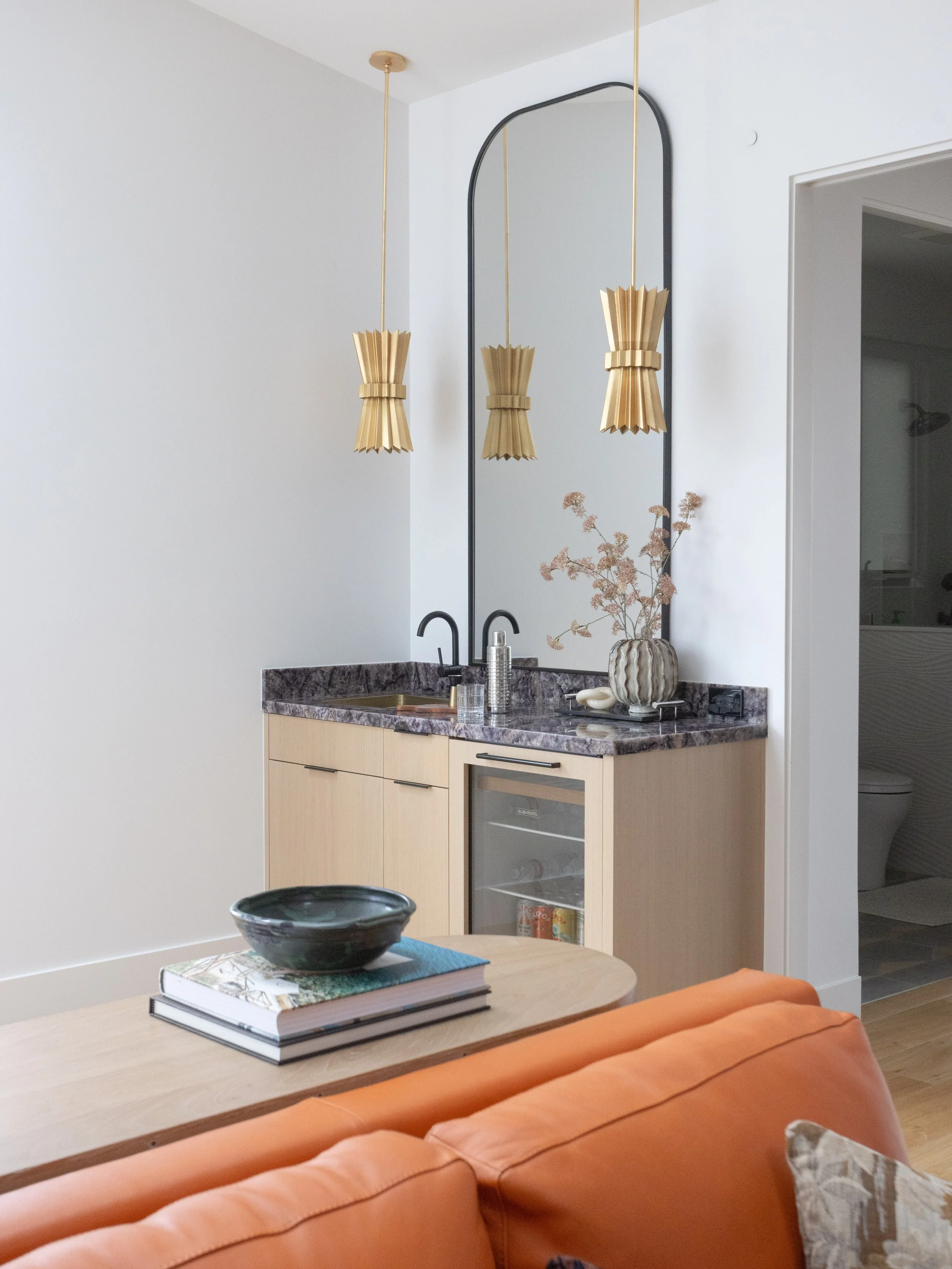
Elevated interiors are not empty. They are intentional.
The Takeaway
Decorating is not about adding more.
It is about choosing wisely and editing bravely.
If your home feels visually overwhelming or you know it needs a reset, booking a consultation is the first step toward creating a space that feels balanced, elevated, and calm.
