
Why Decision Fatigue Is the Biggest Remodel Mistake Homeowners Make
Most remodels do not fall apart because of bad taste.
They fall apart because of decision fatigue.
It usually shows up in tile showrooms. In slab yards. In Pinterest boards with two hundred images that do not actually go together.
Homeowners walk into a space full of options and freeze. Or they rush. Or they let someone else decide.
That is where things start to unravel.

Rivo Alto - Michelle Accetta
Where Decision Fatigue Starts
Material selection is where overwhelm hits hardest.
In a tile store, every option looks good on its own. In a slab yard, every stone feels dramatic. On Pinterest, everything is curated and beautiful. What homeowners struggle with is not choosing something pretty. It is understanding why they like what they pinned and how it all fits together.
Often their boards include opposite design directions without them realizing it. High contrast and low contrast. Warm and cool palettes. Traditional and ultra modern details. Without clear design principles, narrowing becomes exhausting.
What Happens When Homeowners Get Overwhelmed
When decision fatigue sets in, homeowners usually do one of three things.
They delay decisions, which delays the project.
They overspend in the wrong areas because something feels impressive in the moment.
Or they hand decisions over to a store representative, vendor, or contractor who only understands their product, not the overall vision.
That is how you lose cohesion.
Choices become disconnected from the bigger picture. The design starts to feel thrown together instead of intentional.
The Real Cost of Overwhelm
From a real estate perspective, the cost is long term.
When homeowners make decisions from overwhelm instead of clarity, the final result often lacks balance. It feels reactive rather than thoughtful. Buyers may not be able to articulate what feels off, but they sense it.
Timeline delays are common. Regret shows up later. And sometimes homeowners feel like they ended up somewhere they never intended to go.
Not because they lacked good taste.
Because they lacked a framework.
Why Decision Fatigue Happens
There are simply too many options.
Without defined design principles, every choice feels equal. And when everything feels equally important, everything becomes stressful.
Design principles might include:
High contrast or low contrast
Warm or cool color temperature
Heavy materiality or light and airy
Traditional detail or clean minimal lines
Boundaries reduce anxiety. Trying to shop without them increases it.
Trying to do it alone makes it worse.
How to Prevent Decision Fatigue
The solution is structure.
First, define your design principles. Know the feeling and direction before stepping into a showroom.
Second, sequence decisions strategically. Start with elements that have fewer choices, like slabs. Once that anchor is selected, everything else narrows naturally.
Third, align your budget with impact. Decide what the showstopper is going to be before you start spreading money evenly across everything.
When decisions are made in the right order, overwhelm decreases dramatically.
Clarity Creates Better Design
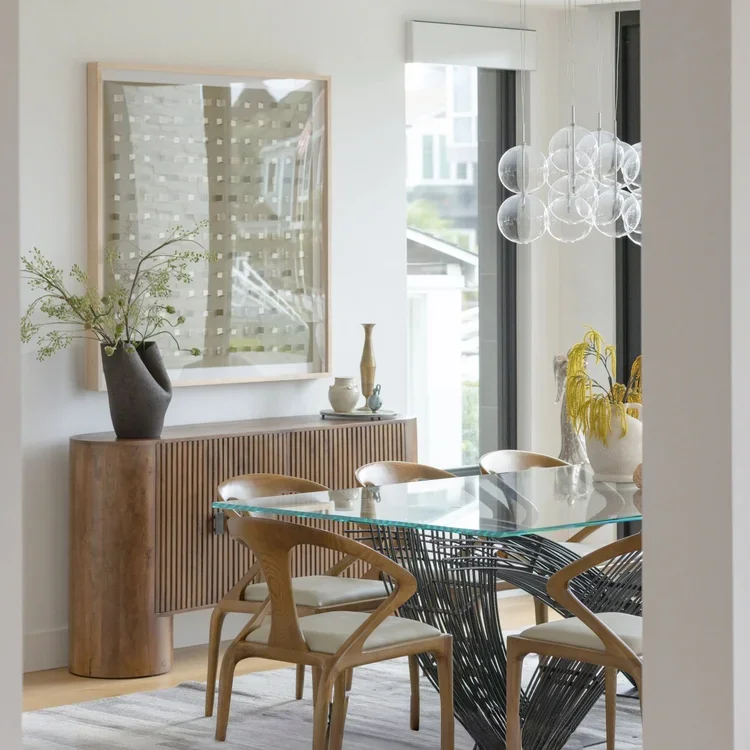
Rivo Alto - Michelle Accetta
A remodel should feel intentional.
When decisions are made from clarity, the result is balanced, cohesive, and aligned with how you actually live. When decisions are made from fatigue, the result often feels busy or disconnected.
In the South Bay, where homes are significant investments and buyers are design savvy, cohesion matters. Balanced design protects value.
If you are planning a remodel and feeling overwhelmed by options, that is normal. The mistake is trying to power through alone.
If you want structure, direction, and a clear path forward, book a consultation. It is the simplest way to protect your design and your investment from decision fatigue.
