
How to Make Low Ceilings Feel Taller | Interior Designer Tips
Low ceilings can make a room feel smaller, heavier, and more confined than it actually is. But you do not necessarily need to change the architecture of your home to make a noticeable difference.
When I walk into a room with low ceilings, the first thing I think about is how to create more vertical length visually.
The goal is not necessarily to hide the fact that the ceiling is low. It is to control where the eye travels so the proportions of the entire room feel taller and more balanced.
Whether I am designing a home in Palos Verdes, Rancho Palos Verdes, Manhattan Beach, Redondo Beach, or elsewhere in the South Bay, these are some of the design strategies I use to make lower ceilings feel taller.
1. Create Vertical Lines Whenever Possible
If you want a ceiling to feel taller, you want to encourage the eye to move up and down rather than side to side.
There are several simple ways to create those long vertical lines throughout a room.
Tall, narrow artwork or mirrors are a great example. Rather than choosing one large horizontal piece, consider something with a vertical orientation. That elongated shape naturally draws your eye upward and makes the wall itself feel taller.
The same principle can be applied through architectural details. Vertical wall paneling, taller doors, floor-to-ceiling tile, or other elongated details can all help emphasize the height of a room.
The overall idea is simple: the more vertical parallel lines you create, the more the eye perceives height.
2. Hang Curtains Close to the Ceiling
Window treatments can completely change how tall a room feels.
One of the biggest mistakes I see is hanging a curtain rod directly above the window casing. When there is space between the top of the window and the ceiling, mounting the rod too low visually tells your eye exactly where the window stops.
Instead, I typically recommend hanging the curtain rod just a few inches below the ceiling and taking the drapery all the way to the floor.
That creates one long, uninterrupted vertical line.
For a room with low ceilings, I would also keep the fabric relatively simple. Solid fabrics, subtle textures, or smaller-scale patterns will generally work better than large, heavy patterns that visually break up the wall.
The combination of a high curtain rod and floor-length drapery can make even a standard-height window feel significantly taller.
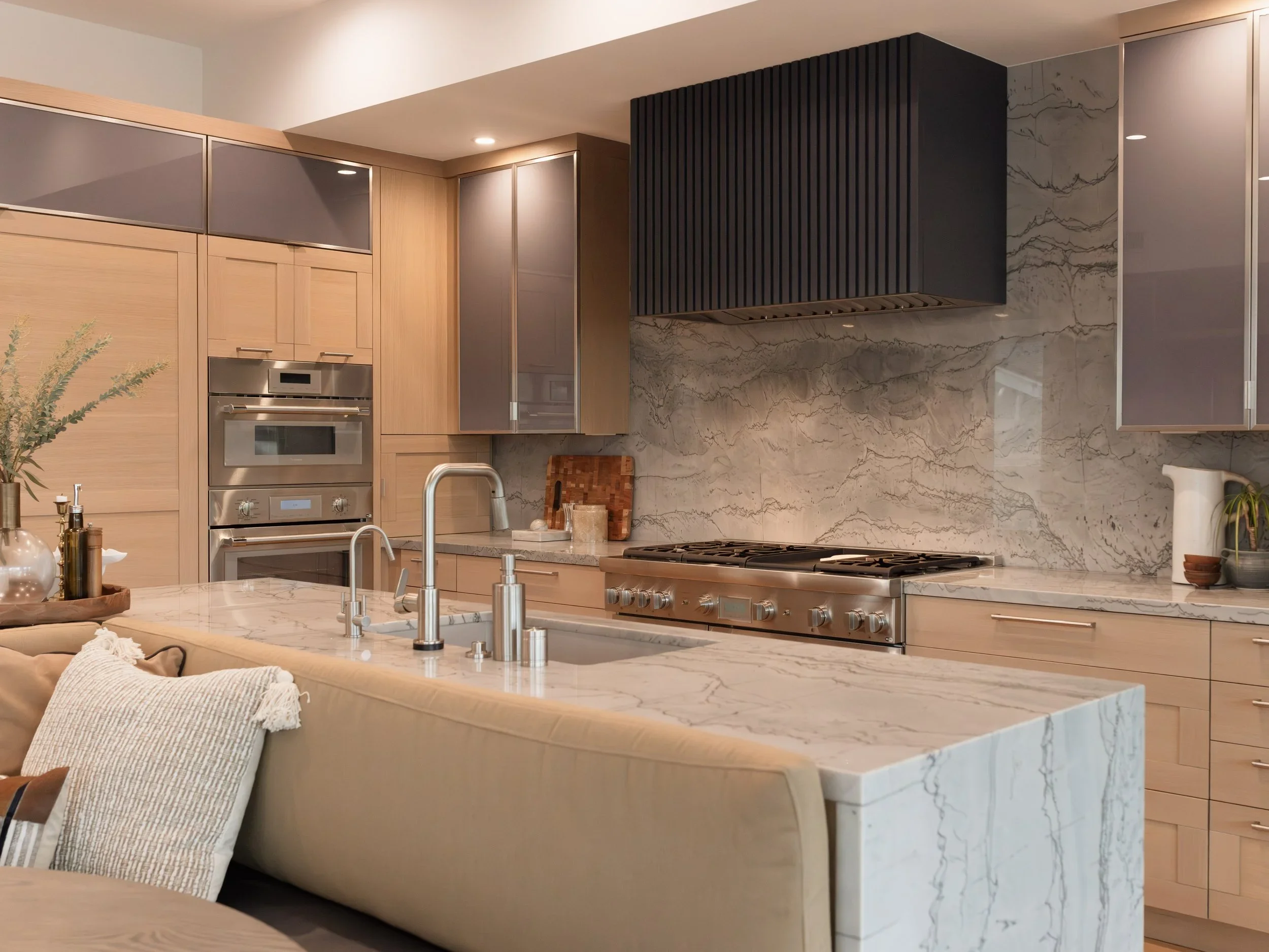
3. Take Kitchen Cabinets All the Way to the Ceiling
This is especially important in kitchens.
Leaving a large gap between the top of the cabinetry and the ceiling creates a very noticeable horizontal line across the room. That line visually shortens the wall and draws attention to exactly where the ceiling begins.
Whenever the architecture and budget allow, I prefer taking cabinetry all the way to the ceiling.
Not only does it give you additional storage, but it creates a continuous vertical line from the countertop upward.
In a kitchen with lower ceilings, that extra 12 or 18 inches of cabinetry can make a surprisingly large visual difference.
4. Pair Vertical Lines With Low-Profile Furniture
One of my favorite ways to exaggerate the feeling of height is actually through the furniture.
A lower-back sofa, lower credenza, or more streamlined furniture creates additional visual space between the furniture and the ceiling.
The contrast is what makes this strategy work.
You have long vertical lines pulling the eye upward while the furniture stays relatively low to the ground. Your eye interprets that additional negative space as height, making the ceiling feel farther away than it actually is.
In rooms with lower ceilings, I generally avoid oversized armoires, very tall high-back chairs, or bulky furniture that fills too much of the vertical space.
The furniture still needs to feel appropriately scaled for the room, but keeping the overall profile lower can dramatically improve the proportions.
5. Keep the Ceiling Brighter Than the Walls
Paint is another easy way to influence how a ceiling is perceived.
In a room with low ceilings, I generally avoid painting the ceiling noticeably darker than the walls.
A dark ceiling can visually bring the ceiling plane toward you, which emphasizes its height rather than disguising it.
Instead, I like using a brighter ceiling color that helps reflect light and allows the ceiling to visually recede.
It does not necessarily have to be stark white. The exact color should work with the palette of the room, but the principle is to keep the ceiling feeling light rather than heavy.
6. Use Lighting That Reinforces Height
Lighting is often overlooked when people are trying to make a low-ceiling room feel taller.
The best lighting strategy is one that continues the vertical movement you are already creating in the rest of the room.
Linear wall sconces are particularly effective because their proportions naturally draw the eye vertically.
Floor lighting that casts light upward can also emphasize the height of the walls and create the perception that there is more space above you.
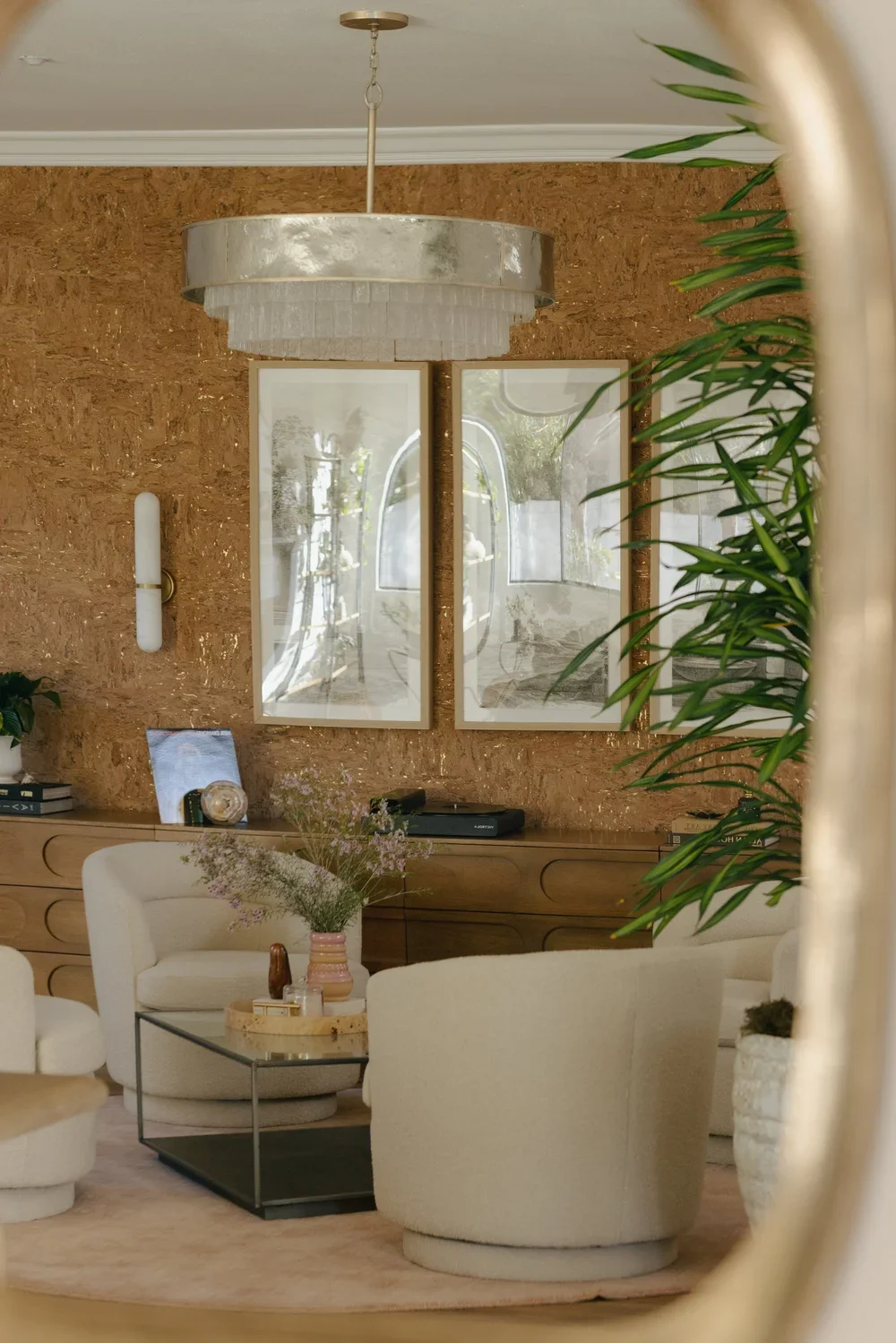
For overhead lighting, flush-mount fixtures can work beautifully because they provide the light you need without visually lowering the ceiling.
That does not mean you can never use a hanging fixture in a room with lower ceilings.
7. Yes, You Can Still Use a Chandelier With a Low Ceiling
One design rule I do not completely agree with is the idea that low ceilings automatically mean you cannot use a chandelier.
You absolutely can, particularly over a dining table.
A dining table creates a natural zone underneath the fixture, so no one needs to walk directly beneath it. This gives you more flexibility with the height of the chandelier.
A beautiful fixture can also become a focal point and give the eye somewhere intentional to land.
The key is choosing something that is proportionate to the room rather than selecting an oversized fixture that visually dominates the entire space.
Low ceilings do not mean you have to remove every interesting design element. You simply have to be more thoughtful about where and how you use them.
8. Avoid Heavy Crown Molding
Crown molding can be beautiful, but heavy crown molding is not always the best choice in a room with a low ceiling.
Large crown creates another strong horizontal line around the perimeter of the room. That line can visually chop off several inches of wall height and make the ceiling feel even lower.
If you want architectural detail, consider something more streamlined or use vertical wall treatments instead.
The goal is to avoid repeatedly emphasizing the horizontal plane where the walls meet the ceiling.
9. Be Careful With Horizontal Art and Mirrors
The same principle applies to artwork and mirrors.
A large horizontal mirror or artwork can make a room feel wider, which can be helpful in some spaces, but it does very little to reinforce height.
If ceiling height is the bigger concern, I would generally choose pieces with a taller, narrower orientation.
Again, you are subtly telling the eye which direction you want it to travel.
What Makes a Low Ceiling Feel Even Lower?
Most of the mistakes I see in lower-ceiling rooms come down to creating too many horizontal breaks or filling too much of the vertical space.
Some of the biggest offenders include heavy crown molding, cabinetry that stops well below the ceiling, curtain rods mounted directly above the window, dark ceiling paint, horizontal artwork, oversized furniture, and bulky high-back chairs.
Individually, none of these elements will necessarily ruin a room.
But when several are combined, they reinforce the ceiling height over and over again.
The Secret Is Better Proportion
Designing around a low ceiling is less about trying to fool someone into believing the ceiling is dramatically taller than it is.
It is really about creating better visual proportions.
Take your curtains higher. Extend cabinetry upward. Choose tall, narrow artwork. Use lighting that emphasizes vertical movement. Keep furniture lower and more streamlined. Allow the ceiling to feel bright rather than heavy.
Those small decisions change the way your eye moves through the room.
And when the eye travels vertically, the entire space begins to feel taller, lighter, and more open.
As an interior designer working throughout Palos Verdes Estates, Rancho Palos Verdes, Palos Verdes, Manhattan Beach, Redondo Beach, Westchester, and the surrounding South Bay and Los Angeles areas, I look at these kinds of proportions early in the design and remodeling process. Small architectural and furnishing decisions can have a major impact on how a finished home feels, even when the actual ceiling height never changes.
