
The Order of Decisions in a Kitchen Remodel
Quick Answer: What Is the Correct Order of Decisions in a Kitchen Remodel?
The best order of decisions in a kitchen remodel starts with the range wall and overall layout, then moves to circulation, cabinetry, and sightlines. After that, finish selections should typically happen in this order: appliances, plumbing fixtures, flooring, stone, tile, cabinet finish, hardware, and lighting.
If you're planning a kitchen remodel, it can be tempting to start by choosing finishes. Most homeowners begin with cabinet colors, tile, or countertops because those are the decisions that feel the most exciting.
The problem is that starting there often leads to kitchens that look beautiful but don’t function well.
I see this all the time. Kitchens with stunning finishes where the range is tucked into a corner, or there’s a dead cabinet corner that no one can actually use. When that happens, it’s usually because the design decisions were made in the wrong order.
A well-designed kitchen comes together in a specific sequence. When you start with the right decisions first, the rest of the kitchen begins to fall into place naturally.
Start With the Range (But First Study the Space)
Before I place the range, I first study how the kitchen interacts with the rest of the home.
I look at things like:
Where are you entering the kitchen from?
What is the natural sightline when you walk in?
Is the kitchen on an exterior wall?
If so, does that wall face the front yard, backyard, or the side of the house?
These questions help determine where the focal wall should be.
Once I understand the space, I like to place the range first.
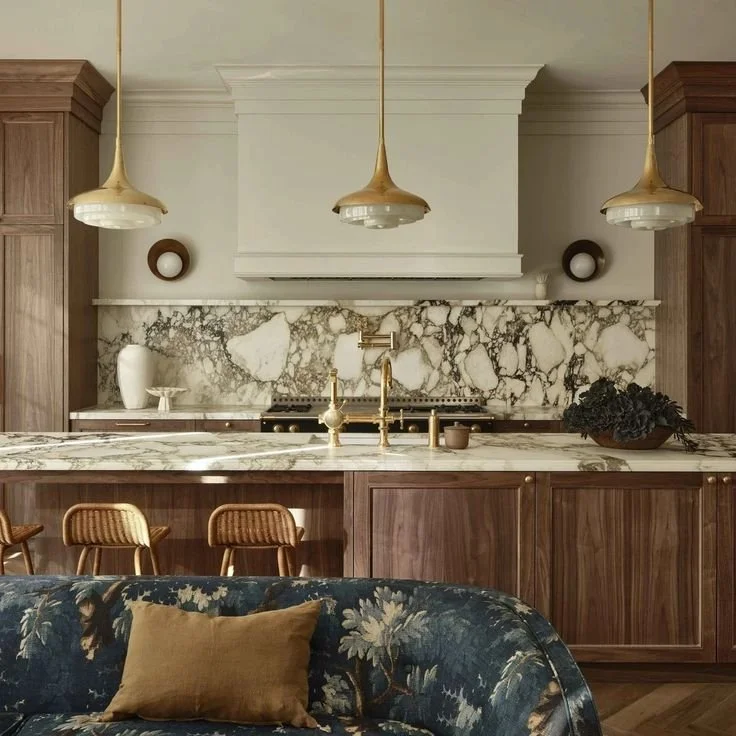
The range, hood, and backsplash create the biggest design moment in the kitchen. If you did nothing else in the entire kitchen except design a beautiful range wall, the space would already feel intentional.
That wall focuses the eye and anchors the entire design.
The Range Wall Creates the Focal Point
The range wall is where the kitchen gets its personality.
This is where you can design a beautiful hood, create symmetry with cabinetry, and frame the backsplash in a way that makes the entire room feel balanced.
When the range is an afterthought, the kitchen often ends up with no focal point. Everything competes for attention instead of working together.
Starting with the range helps establish the visual center of the kitchen.
Layout Comes Next
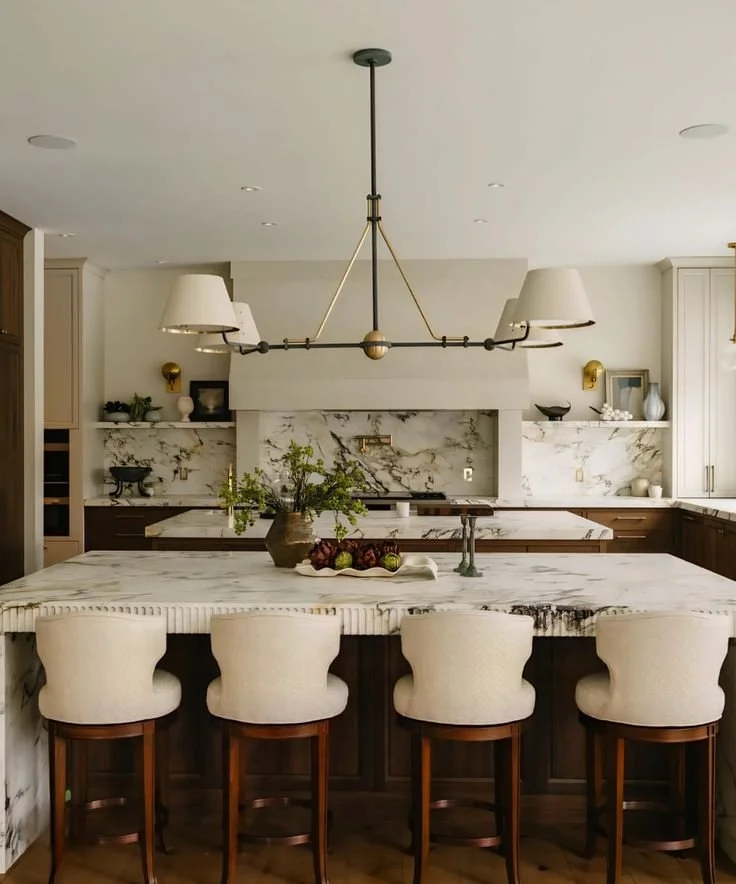
Once the range placement is established, the next step is designing the layout of the kitchen.
The first thing I think about is circulation. How people move through the space matters just as much as how it looks.
This usually means deciding where the island or peninsula will go and how it relates to the rest of the cabinetry.
From there, I look at how the eye travels through the space. I pay attention to where tall cabinets or the refrigerator will be placed compared to areas with only lower cabinets. Smooth transitions between these elements make a kitchen feel calm and balanced instead of crowded.
At this stage I also try to create a functional work triangle between the refrigerator, sink, and range.
Designing for Sightlines
Sightlines are another major factor in kitchen design.
For example, during a Manhattan Beach kitchen remodel I worked on, the architect originally placed the sink against a wall that faced a shallow side yard. The homeowner was a mother of three, so washing dishes there meant staring at a fence instead of being able to see the kids.
Instead, I placed the range on that wall to create a design moment and moved the sink to the island. That allowed the homeowner to wash dishes while looking out toward the living space and backyard where the kids were playing.
Small decisions like this make a kitchen much more enjoyable to live in.
Hood Design Is Where Things Get Fun
I love hood design because it’s an opportunity to create a real statement in the kitchen.
The material I choose usually depends on the architectural style of the house.
One of my favorite finishes is Portola Paints Roman Clay, which gives a soft plaster-like texture that feels earthy and layered without adding a lot of structural weight.
Metal hoods are another great option. They add character and feel a little unexpected, and they don’t have to match all of the faucets or hardware in the kitchen.
The hood becomes a sculptural element that elevates the entire space.

Lighting Is the Jewelry of the Kitchen
Lighting is one of the most underestimated parts of kitchen design.
I like to think of lighting as the jewelry of a home. Just like you wouldn’t leave the house without jewelry, a kitchen shouldn’t be finished without thoughtful lighting.
Pendant lights, sconces, and layered lighting bring personality and warmth into the space while also making it more functional.
How Kitchens Differ Across the South Bay and Los Angeles
Every area has its own common kitchen challenges.
In Manhattan Beach, I often see smaller kitchens being opened up to create better flow between spaces.
In Palos Verdes, kitchens are often larger but benefit from having a stronger focal point and clearer layout.
In Redondo Beach townhomes, the biggest opportunity is often fixing awkward layouts and opening the kitchen to connect it better with the living space.
Understanding how the kitchen fits into the rest of the home is always part of the design process.
The Order of Finish Selections
Once the layout and structure of the kitchen are established, the finish selections come next.
I like to approach these decisions in a very specific order.
Start with decisions that have fewer choices, and move toward decisions with more options. This helps narrow things down quickly.
The order I typically recommend is:
Appliances
Plumbing fixtures
Flooring
Stone or countertops
Tile
Cabinet finish
Hardware
Lighting
Making decisions in this sequence allows earlier selections to guide the later ones.
Adding Custom Details
One of my favorite ways to make a kitchen feel special is through custom cabinet details.
Sometimes that means adding a unique leg detail to an island or using a custom finish on cabinetry so it feels intentional and layered.
Small details like this are often what make a kitchen feel thoughtfully designed rather than standard.
A Well Designed Kitchen Feels Balanced
At the end of the day, the best kitchens feel balanced, intentional, and easy to move through.
When the design decisions happen in the right order, everything works together. The kitchen feels calm, functional, and visually cohesive.
It doesn’t feel like a collection of individual choices. It feels like a complete design.
Planning a Kitchen Remodel?
If you're planning a kitchen remodel in Redondo Beach, Manhattan Beach, Palos Verdes, Westchester, Culver City, or Los Angeles, starting with the right design decisions can make a huge difference in how your kitchen functions and feels.
Book a design consultation and we can walk through the process together so your kitchen comes together intentionally from the start.
Frequently Asked Questions
What should you choose first in a kitchen remodel?
The first major decision in a kitchen remodel should be the layout focal point, which is often the range wall. The range, hood, and backsplash create the biggest visual impact in the kitchen and help guide the layout, cabinetry, and flow of the rest of the space.
Why do designers start with the range in a kitchen remodel?
Designers often start with the range because it anchors the focal wall and helps determine hood placement, cabinet symmetry, and backsplash design. Starting here creates a stronger visual center and makes the rest of the kitchen feel more intentional.
What happens if you pick finishes before the kitchen layout?
When finishes are selected before the layout is resolved, the kitchen can end up with awkward circulation, dead cabinet corners, poor sightlines, and no clear focal point. A beautiful kitchen still needs a functional floor plan to work well.
What is the best order for kitchen remodel selections?
A practical order for kitchen remodel selections is appliances first, then plumbing fixtures, flooring, stone or countertops, tile, cabinet finish, hardware, and lighting. Starting with decisions that have fewer options helps narrow later selections more quickly.
How do you create better flow in a kitchen remodel?
Better flow in a kitchen remodel starts with circulation paths, island or peninsula placement, and careful consideration of sightlines. The goal is to make the kitchen feel balanced, functional, and easy to move through.
Why are sightlines important in kitchen design?
Sightlines affect how the kitchen feels and functions in everyday life. Designers consider what you see when you enter the kitchen and what the homeowner sees while using it, whether that is the backyard, living room, or another important part of the home.
When should you choose kitchen lighting?
Lighting is usually selected after the main layout and finish decisions are established. Once the structure of the kitchen is clear, lighting can be used to enhance the design, support functionality, and add personality.
How do you make a kitchen feel more custom?
A kitchen feels more custom when it includes thoughtful details like a well-designed hood, intentional cabinet finishes, unique island legs, layered lighting, and materials that relate to the architecture of the home.
