
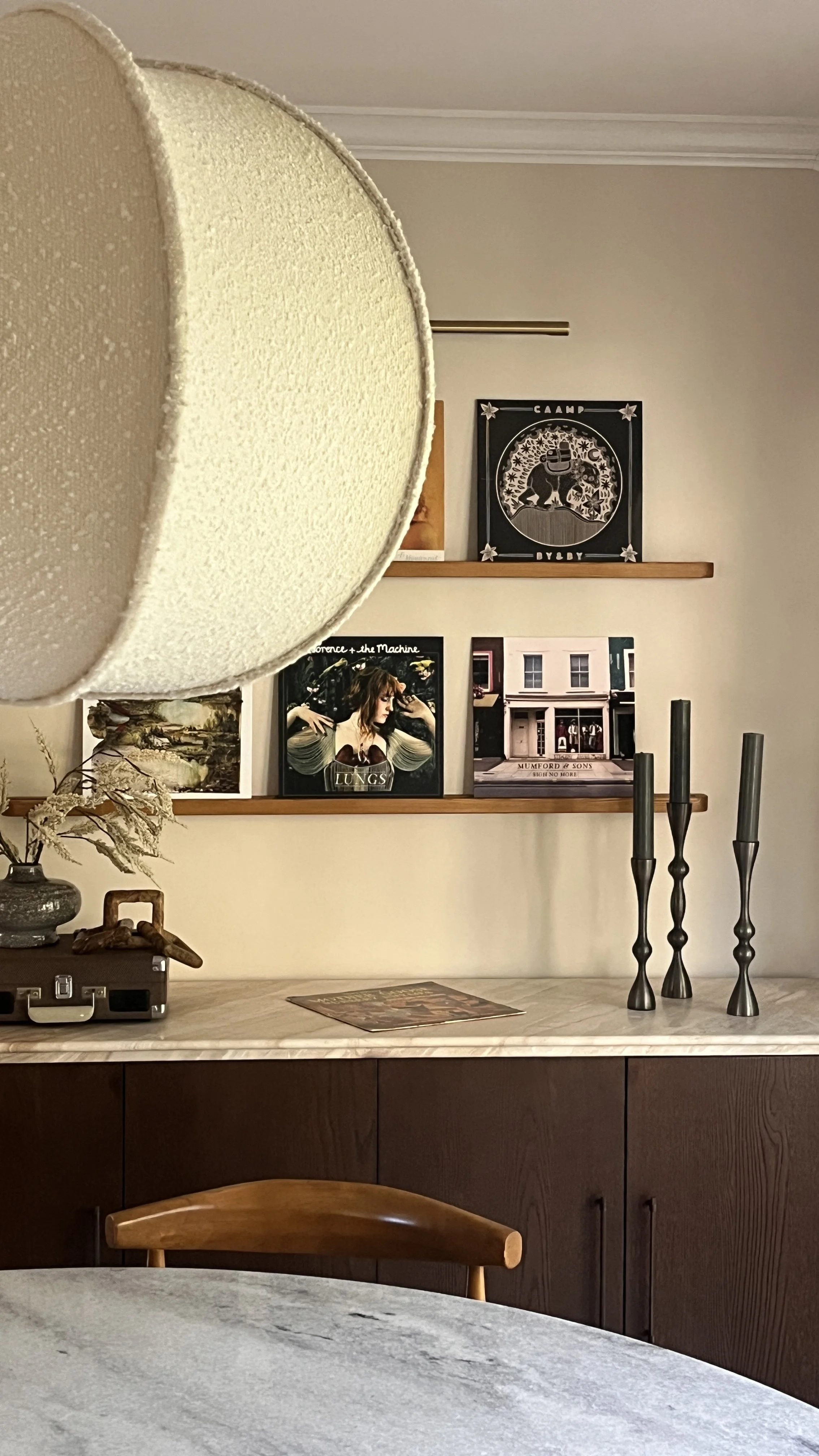
Lately, I have been meeting with potential clients who show me the homes they have designed with ChatGPT.
And I keep seeing the same house.
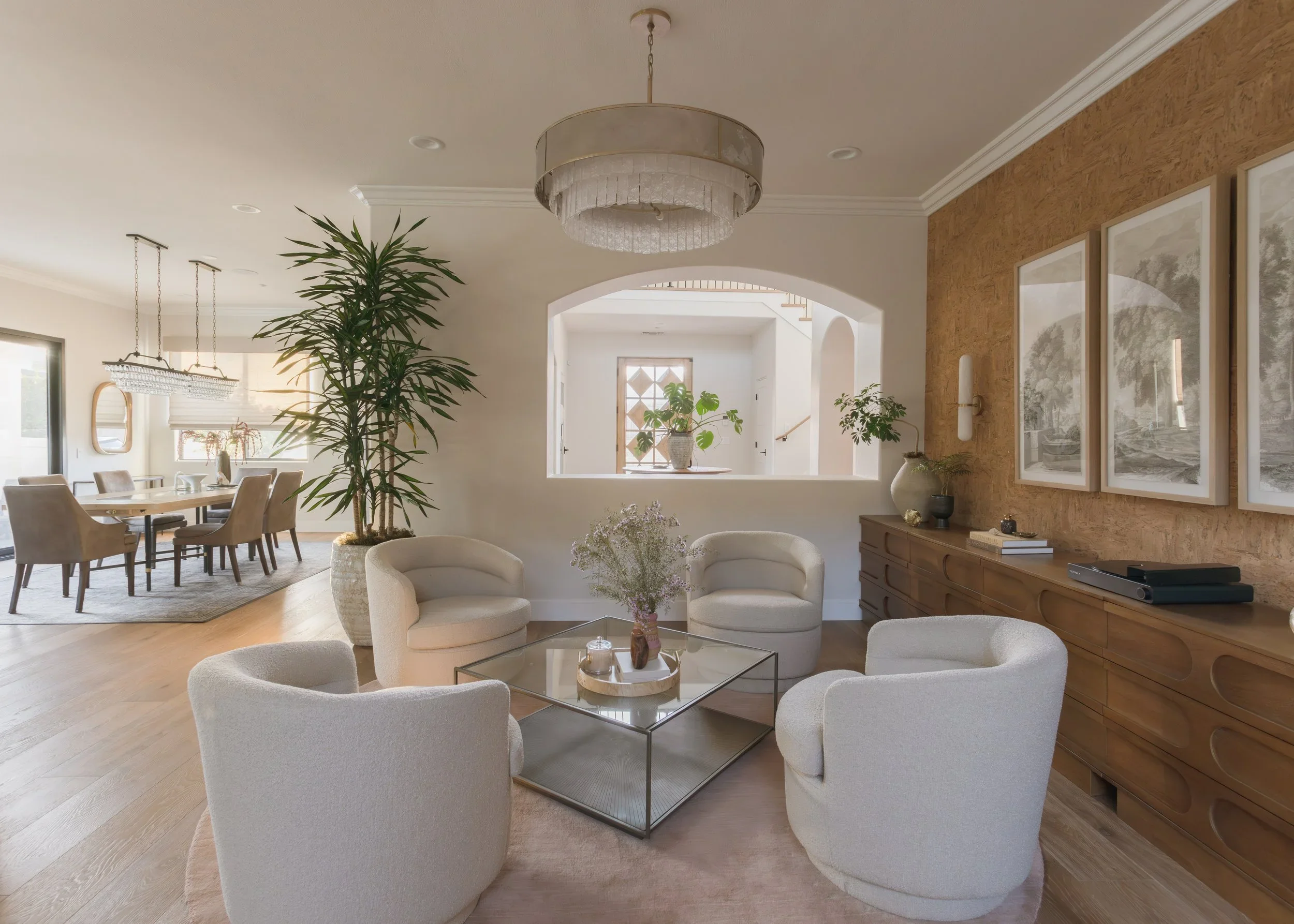
Creamy walls. White oak cabinetry. Arched openings. Plaster fireplaces. Bouclé furniture. Brass lighting. Everything is warm, tan and very pretty.
There is nothing inherently wrong with any of those things. I use many of them in my own work when they are right for the project.
The problem is that I am starting to see them assembled in almost the exact same way over and over again.
That is where I think homeowners need to understand the difference between creating an attractive AI image and actually designing a home.
AI can be an incredibly useful tool. I use AI myself, and I expect what it can do for design to continue changing quickly. But as it exists today, I would treat an AI-generated interior as a jumping-off point, not a design plan.
A beautiful rendering can tell you something about what you like.
It cannot, by itself, tell you what should actually be built in your house.
Can ChatGPT Actually Design a House?
ChatGPT can help you explore ideas, analyze images you upload, generate new design concepts and make changes to existing images. The technology has become remarkably good at translating a written description into something that looks convincing.
But a convincing image and a resolved interior design are two very different things.
A real design has to work within actual dimensions. It has to account for architecture, proportions, construction, circulation, sightlines, storage, materials, furniture sizes and how the people living in the house actually use it.
And that is usually where I see the gap.
Even current AI image systems have limitations with precise spatial localization and can interpret visual information inaccurately.
In a home, a few inches can completely change whether something works.
AI Can Make Something Look Right Without Knowing If It Is Right
One of the biggest issues I see is scale.
I recently had a client show me an AI-generated kitchen concept that included adding windows. On the image, the windows looked great.
Then I walked the actual house.
The scale of what was shown in the AI image was wildly different from what would have been needed in that space to create the same impact.
That is an important distinction.
An image generator is trying to make the image look visually successful. A designer has to make the real room successful.
Those are not always the same thing.
If I am designing windows, cabinetry, an island, a fireplace or even selecting a sofa, I am looking at actual measurements and proportions. I am thinking about how large something should feel in relation to the ceiling height, walls, openings and everything surrounding it.
A rendering can make a six-foot element look like an eight-foot element if that creates the prettier picture.
Construction does not work that way.
AI Only Knows the Story You Give It
Another limitation is that AI does not automatically know the entire story of your home.
You can certainly give ChatGPT more information. You can upload photographs, plans and measurements. You can explain your preferences and continue refining your prompts.
The more context you provide, the more useful it can become.
But that is also the point.
If you do not know which questions need to be asked, you may not know which information the AI needs.
I had another client with a 1990s kitchen. In the existing kitchen, the upper cabinetry stopped below the ceiling.
The AI concept they created maintained that same configuration.
Could you specifically tell ChatGPT to take the cabinets to the ceiling? Of course.
But first, you have to know that is something worth reconsidering.
As a designer, I am not simply looking at what is already there and making it prettier. I am questioning the existing decisions.
Why is this here?
Should it still be here?
Can the layout work better?
Does this architectural detail belong in this house?
Is there a better way to use this wall?
What opportunities are we missing?
AI can generate possibilities, but someone still has to know which possibilities to explore.
A Room Does Not Exist by Itself
Sightlines are one of the biggest things I consider when designing a house, and they are difficult to understand from one isolated image.
Stand in your kitchen.
What do you see through the doorway into the living room?
What do you see when you walk through the front door?
From the dining table, are you looking directly at a beautiful built-in, the side of a refrigerator or a blank wall?
Can you see the kitchen pendant from the living room? If you can, how does it relate to the fixture over the dining table?
A home is experienced while you move through it.
This is why I always think there should be an invisible string connecting the rooms.
Every room does not need to match. I actually do not want them to.
But there should be something connecting them so the entire home feels intentional.
Maybe it is a repetition of materials. Maybe it is proportion. Maybe it is color, lighting, architectural language or simply the feeling the rooms create together.
If you generate a kitchen, then separately generate a living room, then separately generate a primary bedroom, you can end up with three attractive rooms that do not feel like they belong to the same house.
That is very different from designing a home as a whole.
Your House Should Work for the Way You Actually Live
Design is also about behavior.
I need to know how you make coffee in the morning.
Where your kids drop their backpacks.
What ends up sitting on your kitchen counter.
Whether you entertain 20 people or would rather have dinner with four.
How much pantry storage you actually use.
Whether you want your appliances hidden.
Where you charge things.
Which door you enter every day.
What you want to see when you are sitting on your sofa.
Good storage, circulation and space planning often come from asking very ordinary questions about daily life.
The beautiful part comes afterward.
That is one of the reasons I consider truly custom interior design a luxury. Luxury is not simply choosing more expensive materials.
Luxury is having a home planned around you.
The AI Sofa You Love May Not Exist
This is especially important with furnishings.
An AI-generated room might show you the perfect sofa, coffee table, rug and light fixture.
But those objects may be visual ideas rather than actual products you can order.
A real furnishings design has another entire layer behind the image.
I have to find the actual piece.
Does it come in the size we need?
What is the upholstery?
Can we see a sample?
What does the wood finish look like in person?
How does that finish look next to the flooring?
Is it comfortable?
Is it appropriate for kids or pets?
What does it cost?
Is it in stock?
What is the lead time?
Will it fit through the door?
Does it work with every other piece we are ordering?
That is sourcing.
And sourcing is a huge part of interior design.
An inspiration image can show you the feeling of a room. A designer has to figure out how to make that room exist.
Materials Have to Be Seen in the Real House
Materials are another place where an image can only tell you so much.
I want to see the stone next to the cabinet sample.
I want to see what the paint does in your afternoon light.
I want to hold the flooring against the cabinetry.
I want to see whether the undertones start fighting with each other.
I want to know how the material continues into the next room.
Something can photograph beautifully and be completely wrong once it is inside your house.
That physical evaluation is part of the design process.
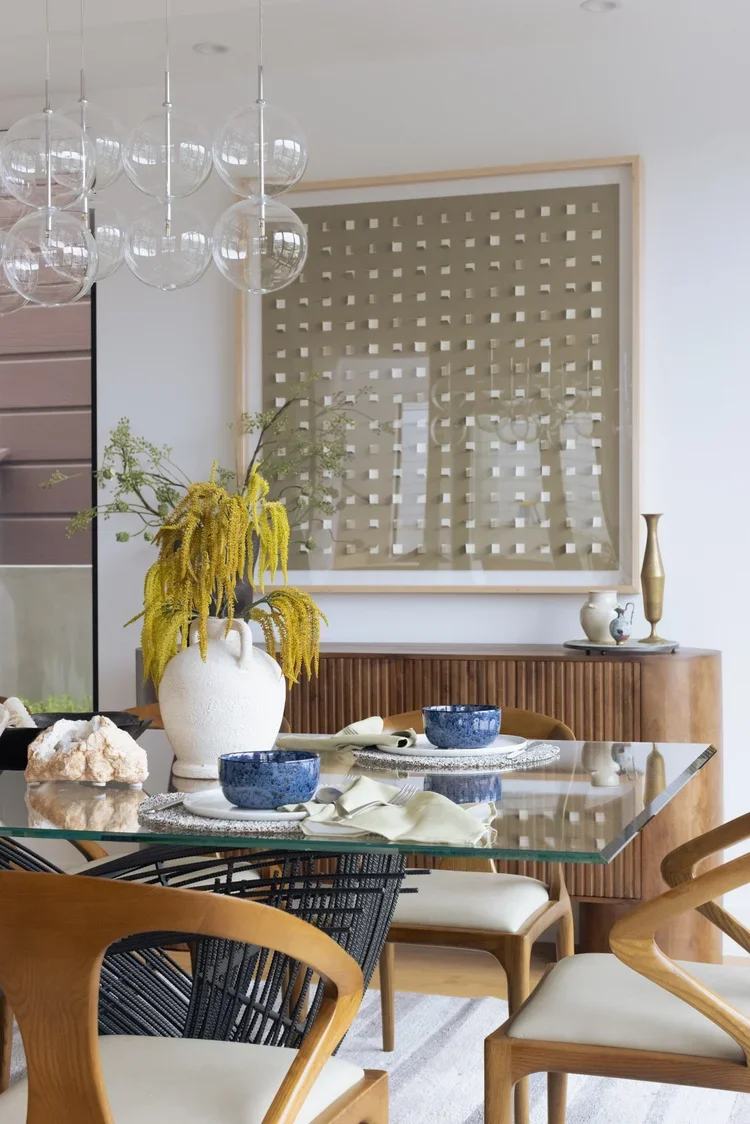
Why Are So Many AI-Designed Homes Starting to Look the Same?
This is probably the part that concerns me most creatively.
Right now, many people are requesting versions of the same aesthetic: warm minimalism, creamy neutrals, pale oak, plaster, curves, brass and soft textured furniture. Those ingredients are also heavily represented in current design coverage and search trends.
Again, none of those materials are bad.
But if everyone is feeding AI similar inspiration and asking for variations of the same look, we should not be surprised when the outputs begin to feel familiar.
Your home can become timestamped to this exact moment.
And that worries me more than whether something is technically “on trend” or “off trend.”
A house can include current ideas and still have longevity. The difference is using those ideas because they make sense for that architecture and that person, rather than because they happen to be the visual language showing up everywhere right now.
The best homes usually have something harder to name about them.
Maybe there is an unexpected material.
A piece from another era.
An unusual color relationship.
A detail developed specifically for the architecture.
Something the homeowner already owned.
A strange little constraint that led to a better solution.
Those are often the things that give a house its personality.
AI Is Looking Backward. Design Still Needs Someone Looking Forward.
AI is extraordinarily good at synthesizing what already exists.
That can make it an amazing inspiration tool.
But I do not want every project I design to look like a summary of what has already been popular.
Part of my job is knowing what has become oversaturated and deciding when a trend makes sense, when it needs to be interpreted differently and when we should go in another direction entirely.
A homeowner might ask for white oak because every image they have saved has white oak.
My next question is: Does white oak actually belong here?
Maybe it does.
Maybe walnut would be better.
Maybe painted cabinetry makes much more sense for the architecture.
Maybe we keep one beautiful original element that an AI rendering would have erased.
That judgment is where design becomes personal.
So, Should You Use ChatGPT for Interior Design?
Yes.
I actually think AI can be a great tool at the beginning of the design process.
Use it to explore.
Use it to help put words to something you cannot describe.
Use it to compare moods.
Use it to play with ideas before committing money to them.
Use it to show your designer something and say, “I don't necessarily want this exact room, but I love how this feels.”
That is useful information.
Just do not confuse the rendering with the finished plan.
As AI develops, I expect some of these limitations to change. What these tools can do even a year from now may be significantly different from what they can do today.
I am talking about what I am seeing right now: homeowners arriving with extremely convincing images that can create the impression that the design work has already been done.
Usually, it has only begun.

A Custom Home Should Not Feel Like Everyone Else's Custom Home
To me, the real luxury of hiring an interior designer is not having someone make your house look expensive.
It is having someone think deeply about your house.
Your architecture.
Your dimensions.
Your routines.
Your storage.
Your furniture.
Your materials.
Your sightlines.
Your budget.
And the things you love that may have nothing to do with what is currently trending.
The goal is not to create a house that looks like the perfect AI image.
The goal is to create a home where every decision makes sense once you are actually standing inside it.
That is the difference between inspiration and design.
And that is where the most beautiful homes become unmistakably personal.
If you are planning a remodel, new build or whole-home furnishing project in the South Bay and you already have folders full of Pinterest images, saved Instagram posts or AI-generated rooms, bring them. They are useful.
My job is to take that inspiration, figure out what actually belongs in your home, and turn it into something real, cohesive and completely yours.
FAQ’s
Can ChatGPT design my house?
ChatGPT can help generate ideas, explore styles and visualize possible design directions. It can also work with information and images you provide. However, an AI-generated concept should not automatically be treated as a construction, space-planning or purchasing plan. A finished design needs to be verified against actual dimensions, architecture, materials, product specifications and the way the household uses the space.
Can AI replace an interior designer?
AI can automate and accelerate parts of the inspiration and visualization process, but interior design involves much more than producing an attractive image. Designers evaluate scale, sightlines, circulation, architecture, materials, sourcing, construction realities and how multiple rooms work together.
Are the furniture pieces in AI interior design images real?
Not necessarily. AI-generated interiors may contain furniture and lighting that resemble real products without representing a specific purchasable item. If you want to recreate the room, individual products still need to be sourced and verified for dimensions, materials, cost, availability and lead time.
How should I use ChatGPT before hiring an interior designer?
Use it as an exploration tool. Generate ideas, identify styles you respond to and save examples of rooms, materials or details you like. Then bring that information to your designer. It can be much more useful as a way to communicate your preferences than as a final design specification.
Why does custom interior design look different from an AI-generated room?
Custom interior design begins with the actual home and the people living in it. The design responds to architecture, dimensions, light, existing conditions, routines, storage needs, materials and sightlines throughout the house. Those constraints and personal details often create the decisions that make a home feel individual.
