
The Rule of Three or More: Why Some Home Exteriors Feel Custom and Others Fall Flat
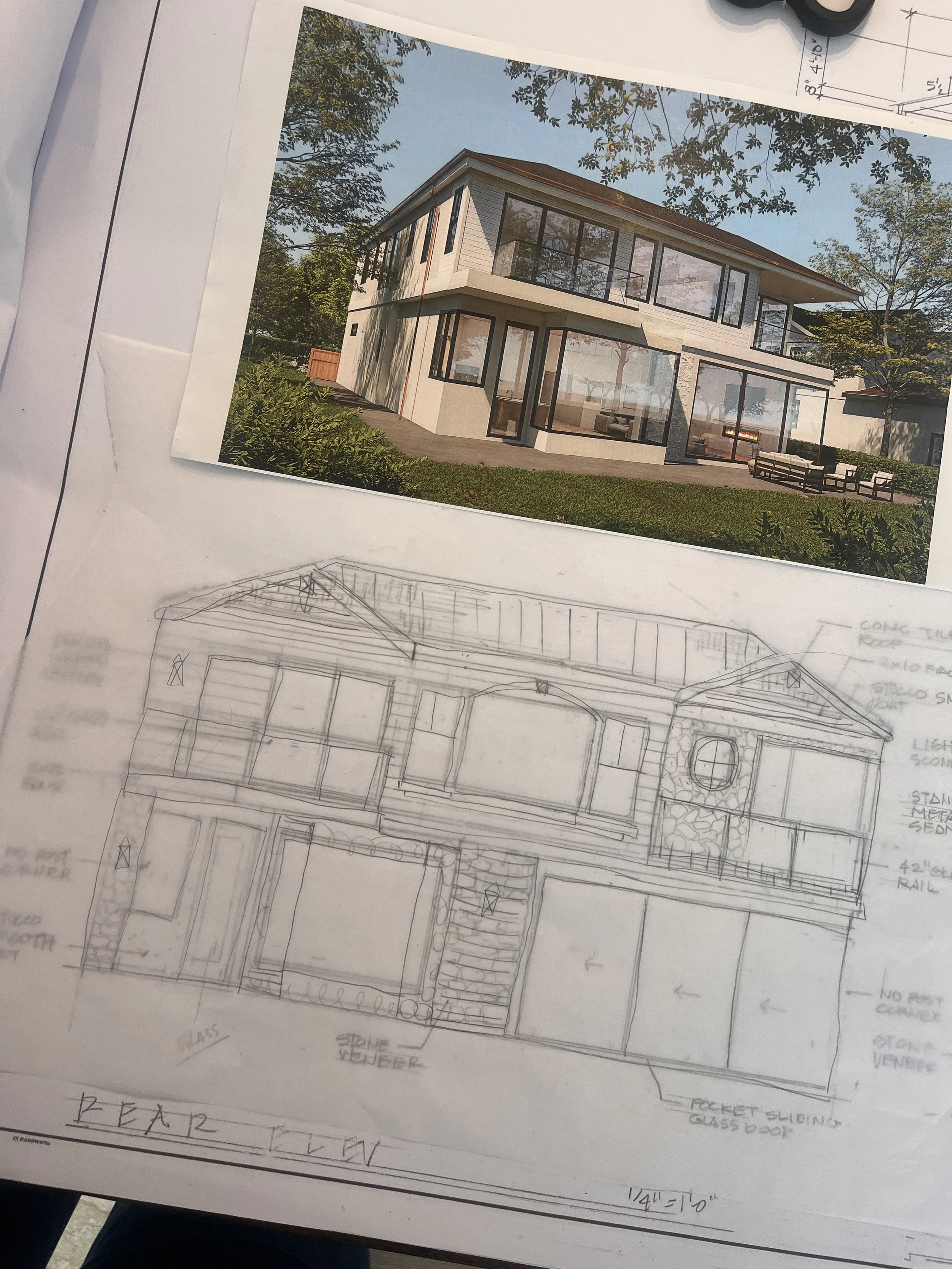
When clients are investing in a custom home or a significant renovation, one of their biggest concerns is that the finished house will still somehow look generic.
They are choosing beautiful materials. They are spending thoughtfully. They are paying attention to every detail.
And yet, something can still feel missing.
Often, the problem is not that the exterior needs a more expensive material. It needs more depth.
This is where one of my personal design principles comes in: the Rule of Three or More.
For the exterior of a home to feel elevated, complete and architecturally interesting, I believe it usually needs at least three distinct design elements.
Those elements might be three colors. They could be two colors and a natural stone. They might include stucco, wood and metal. The exact combination changes depending on the architecture, location and style of the home.
But the principle remains the same.
A luxury exterior needs more than expensive materials. It needs thoughtful layering, hierarchy and restraint.
Why Two Elements Often Are Not Enough
A common approach to an exterior is to choose one main paint color and a second color for the trim.
Technically, the house is no longer one color.
But visually, it can still feel flat.
Without a third element, there may not be enough variation to define the architecture, create dimension or make the home feel fully resolved. The result can feel stark, unfinished or a little too builder-basic, even when the home itself is anything but basic.
The third element is often what brings the exterior to life.
It may be stone that grounds the house, a wood garage door that adds warmth, a metal roof detail that emphasizes an architectural feature or a contrasting finish around the windows.
It does not have to be loud.
In fact, it usually should not be.
The best exterior palettes often rely on subtle shifts in material, color and texture. The goal is not to create a house with a little bit of everything. The goal is to create enough contrast and variation that the architecture has depth.
What Counts as an Exterior Element?
There are more tools available than most homeowners initially realize.
An exterior element might be paint, stone, brick, siding or stucco. It could also be a wooden pergola, shutters, a metal roof, the finish of the garage door or the color of the front door.
Even details such as window surrounds and window sills can become part of the exterior composition.
The architectural style determines which tools belong in the toolbox.
A modern home may rely on smooth stucco, clean-lined siding and a warm wood element. A traditional home might layer painted siding, brick and contrasting shutters. A coastal home could combine soft paint colors, natural wood and textural stone.
The rule still applies, but the materials and finishes change.
Every architectural style has its own visual language. The job is to understand that language and then use it in a way that feels fresh, personal and appropriate for the home.
One Element Should Lead
The Rule of Three or More does not mean every material should receive equal attention.
One element should be dominant. The others should support it.
Perhaps the primary material is a warm white stucco. A natural stone could ground the base of the house, while a wood garage door adds warmth and contrast.
Or the home may be primarily painted siding, with brick used to emphasize the entry and a darker trim color defining the windows.
The hierarchy is what keeps the exterior from becoming busy.
Without hierarchy, three elements can quickly become five competing ideas. With hierarchy, the materials feel intentional. Your eye understands where to look, and the architecture feels composed rather than decorated.
Tone Matters More Than an Exact Match
The elements do not necessarily need to match one another.
They do, however, need to share the right tone.
A warm stone placed next to a cool gray paint can feel disconnected, even when both materials are beautiful independently. A wood finish may technically coordinate with the paint color but still feel too orange, too red or too weathered for the overall direction.
Tone is what allows different materials to relate to one another.
This is especially important during a renovation when an existing element is staying in place.
The roof is a perfect example.
If the roof is not being replaced, its color and undertone must be considered when selecting the new exterior palette. Ignoring it will not make it disappear. It will simply leave the new finishes competing with one of the largest visual surfaces on the home.
A successful exterior design responds to the elements that are staying just as carefully as it selects the new ones.

Domino Magazine
The Exterior Should Set the Tone for the Entire Home
Ideally, the exterior palette is developed before construction begins.
The exterior is not simply something to address after the floor plans are complete. It sets the tone for the entire property and can influence decisions about windows, roofing, doors, masonry and lighting.
Exterior lighting is particularly important.
The wrong fixture can pull the house in an entirely different stylistic direction. The right fixture reinforces the architecture and begins telling the story of the interior before anyone walks through the front door.
That connection matters.
The invisible string that ties the rooms of a home together should not stop at the front door.
Materials, shapes and lines can continue from the exterior into the interior. An arch used at the entry might reappear in an interior doorway. A natural stone used outside may influence the fireplace material. Repetitive lines, ceiling details and lighting can create a subtle relationship between the two.
The exterior should offer a hint of what is to come.
Designing for Southern California
Here in Southern California, the relationship between indoor and outdoor living makes this continuity especially important.
Doors are opened. Patios function like additional rooms. Exterior entertaining spaces are often visible from the main living areas, and the home may be experienced from the outside almost as much as it is from within.
Because of that, the exterior cannot feel like a separate design exercise.
The materials need to respond to the architecture, the natural light, the landscape and the way the client plans to live in the home.
A beautiful exterior in the South Bay should feel appropriate to its setting without becoming predictable or overly themed. It can acknowledge coastal influence, natural textures and relaxed living while still feeling sophisticated and completely personal.
Luxury Is in the Composition
A costly material does not automatically make a home look custom.
Stone can feel misplaced. Wood can feel added on. A dramatic paint color can overpower the architecture. Even beautiful selections can fall flat when they are not considered as part of a larger composition.
That is why exterior design needs to happen early and why it needs to be viewed as a whole.
The Rule of Three or More is not about adding materials simply for the sake of adding them.
It is about creating enough layering to give the home dimension, while exercising enough restraint to keep the result timeless.
When the materials, tones and architectural details are selected together, the home feels finished. It feels custom. And it reflects the level of thought and investment that went into creating it.
Because when you are building a luxury home, the exterior should do more than make a good first impression.
It should begin the story.
Frequently Asked Questions About Luxury Home Exteriors
What is the Rule of Three or More in exterior design?
The Rule of Three or More is my personal design principle that a home exterior generally needs at least three distinct elements to feel complete, elevated and architecturally interesting. Those elements might include three colors, two colors and a stone, or a combination of stucco, wood and metal. The exact mix depends on the style and architecture of the home.
Why can a home with only one or two exterior colors feel unfinished?
One primary color and one trim color may not create enough variation to define the architecture. Without another layer of color, material or texture, the exterior can feel flat, stark or builder-basic. A thoughtfully chosen third element often adds the depth that makes the home feel custom and fully resolved.
What can count as an exterior design element?
Exterior elements can include paint, stone, brick, siding, stucco, wood shutters, a wooden pergola, metal roofing, garage doors, front doors and window surrounds. An element may be defined by its color, material, texture or finish.
Does the Rule of Three or More work with every architectural style?
Yes. The principle remains the same, but the materials change depending on the architectural style. A modern home may use smooth stucco, linear siding and warm wood, while a traditional home may combine painted siding, brick and shutters. Each style has its own set of appropriate design tools.
How do you keep three or more exterior elements from looking too busy?
The elements need a clear hierarchy. One material or color should lead, while the others support it. They should also share compatible tones and feel appropriate to the architecture. The goal is not to give every feature equal attention. It is to create thoughtful layers without allowing the materials to compete.
Do all of the exterior materials and colors need to match?
No. They do not need to match exactly, but their tones should work together. A warm stone, for example, may feel disconnected beside a paint color with a strong cool undertone. Different materials can create contrast while still feeling harmonious when their tones are carefully considered.
How should an existing roof affect an exterior renovation?
When the roof is remaining, its color and undertone should influence the entire exterior palette. The roof is one of the largest visual surfaces on the home, so it cannot be treated as a separate element. New paint, stone, brick, wood and metal finishes should all relate to it.
When should the exterior design be developed during a custom build?
Ideally, the exterior palette should be developed before construction begins and before major materials are ordered. Early planning helps coordinate the roofing, windows, doors, masonry, siding, paint and exterior lighting. It also reduces the chance of expensive changes later in the project.
Should the exterior design relate to the interior of the home?
Yes. The exterior should begin the story of the home and give a subtle indication of what is inside. Materials, arches, repeated lines, ceiling details and lighting can create an invisible connection between the exterior and interior. This is especially important in Southern California homes, where indoor and outdoor spaces often function together.
How does thoughtful exterior design protect the investment in a luxury home?
A clear exterior design plan helps prevent costly material mistakes and disconnected selections. It improves curb appeal, supports the architecture and helps the finished home feel intentional and custom. Luxury is not created by choosing expensive materials alone. It comes from composing those materials with hierarchy, restraint and attention to detail.
