
What Actually Makes a Bathroom Timeless?
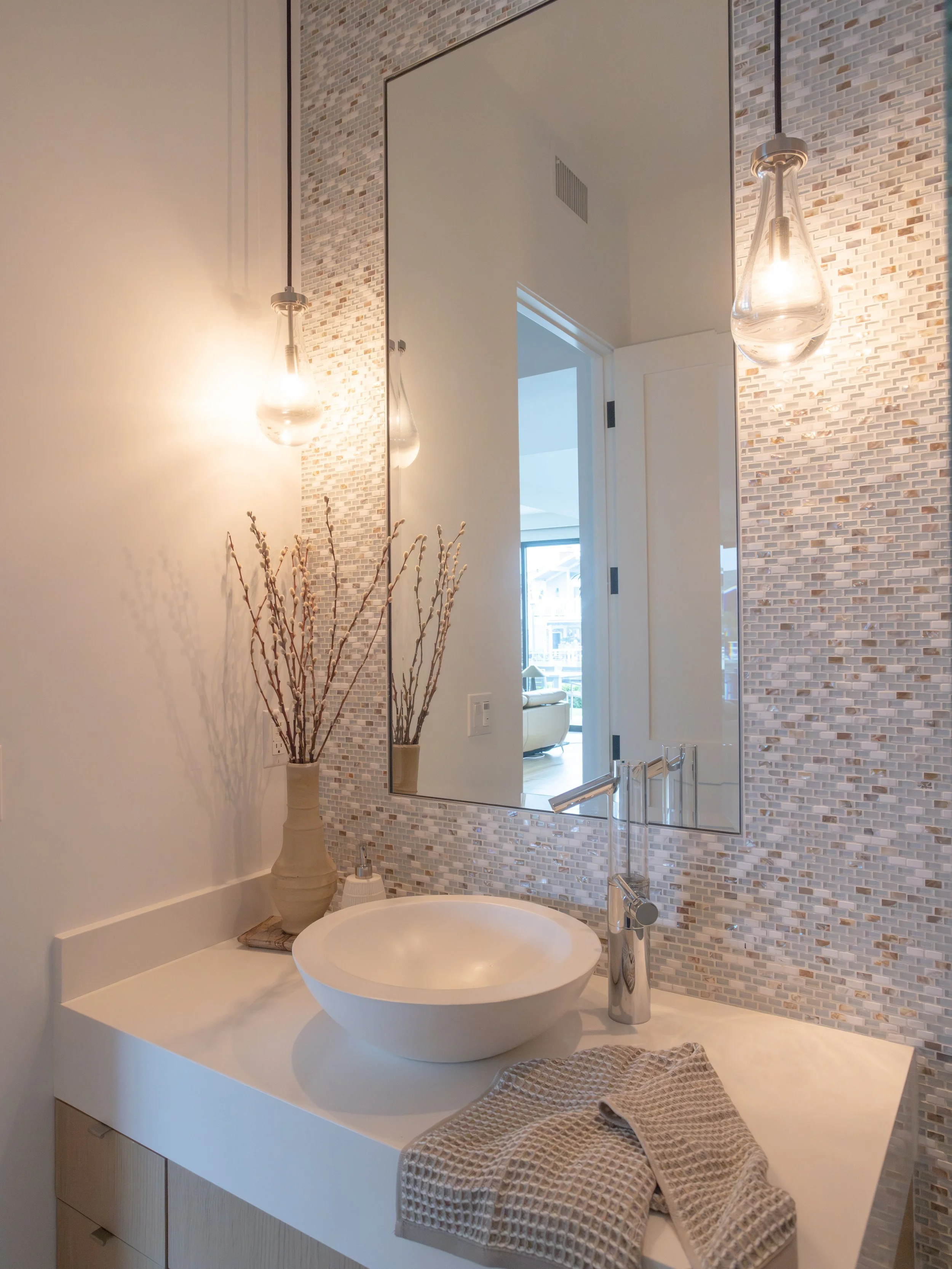
“Timeless” is one of those words that gets used constantly in interior design, but I think it is often misunderstood.
A timeless bathroom is not necessarily white. It is not automatically marble. It is not a specific cabinet style, plumbing finish, or tile shape.
To me, a bathroom feels timeless when it makes sense for the architecture of the home.
That can look completely different from one house to the next.
A Spanish home in Palos Verdes might call for warm stone, antique brass, and finishes with character. A Mid-Century home nearby may need cleaner lines and a very different material palette. A Craftsman in Redondo Beach should not necessarily be designed the same way as a coastal home in Manhattan Beach or a ranch home in Westchester.
Timeless design is really about creating continuity.
When the materials, colors, cabinetry, and details all feel like they belong to the same home, the bathroom can age beautifully. When they do not, even a brand-new remodel can immediately feel dated.
Here are some of the biggest mistakes I see homeowners make when trying to create a timeless bathroom.
1. Mixing Materials From Different Eras of a Remodel
This is probably the biggest mistake I see.
A homeowner decides to update the shower but leaves the existing floor. Or they replace the countertop while keeping older tile. Instead of choosing something that relates to what is already there, they choose whatever happens to feel current at the moment.
The result is usually a bathroom that looks partially remodeled rather than timeless.
For example, imagine an existing bathroom with small-format warm travertine flooring. The homeowner replaces the shower with a large-format cool gray porcelain tile because that is what they are seeing everywhere.
Neither material is necessarily bad on its own.
The problem is that they are speaking completely different design languages.
You can immediately see that one part of the bathroom belongs to one era and another part belongs to a different renovation.
That is why I tend to view bathroom remodels as all or nothing.
If you are going to start replacing the permanent finishes in a bathroom, I generally recommend looking at the room as a whole. Tile, countertops, cabinetry, plumbing fixtures, lighting, and paint all need to work together.
Otherwise, you can spend a significant amount of money and still end up with a room that feels pieced together.
2. Ignoring Undertones
One of the easiest ways to make a bathroom feel “off” is to mix warm and cool undertones without realizing it.
This happens frequently when someone wants an easy update and decides to repaint the walls or cabinetry.
Paint sounds simple, but color can completely change the way existing stone and tile read.
Even whites have undertones.
If your existing countertop and tile are warm and you introduce a cool gray or blue-white paint, the original materials may suddenly look yellow or dated.
The reverse can happen too.
The architecture of the home should also help guide the overall palette.
Modern homes can often support cooler tones and cleaner materials. Spanish and Craftsman homes tend to feel more natural with warmer palettes.
That does not mean every Spanish bathroom needs to be beige or every modern bathroom needs to be gray. It means understanding the undertones and staying within a palette that feels consistent with the house.
That consistency is what helps create a timeless result.
3. Designing Around Trends Instead of the House
One of the quickest ways to date a bathroom is to fully commit to whatever aesthetic happens to be trending at the moment.
There is nothing wrong with being influenced by current design. The problem comes when every permanent decision follows the same trend.
Black and white bathrooms are a good example.
They have been incredibly popular, but I think the very graphic black-and-white look is going to become strongly associated with the early 2020s.
When every element is trend-driven, from the tile to the plumbing fixtures to the cabinetry and lighting, you are essentially putting a timestamp on the room.
I would rather start with the home itself.
What style is it?
When was it built?
What materials already make sense there?
What should the bathroom feel connected to?
A bathroom in a Redondo Beach Craftsman should answer those questions differently than one in a Palos Verdes Mid-Century home.
Following the architecture gives you a much stronger foundation than following Pinterest.
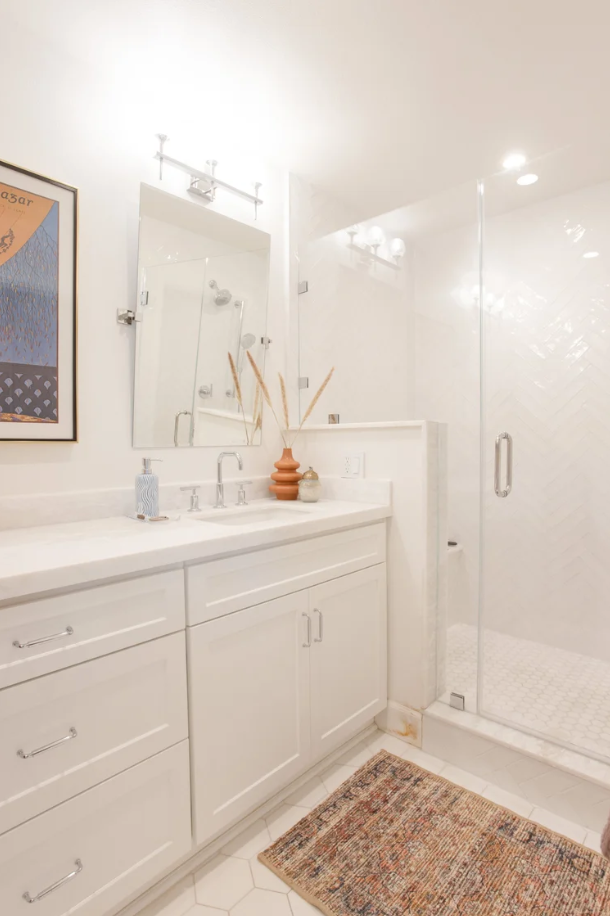
4. Choose Materials That Make Sense for the Architecture
There is no single tile or countertop material that I would put into every bathroom.
Personally, I love natural stone. I think a beautiful stone can transcend trends and work across many architectural styles.
But that does not mean stone is always the answer.
A modern bathroom may look fantastic with terrazzo or a more architectural tile. A Spanish home may call for warmer, more organic materials. A Craftsman home might benefit from texture and materials that feel grounded and substantial.
The material is less important than whether it belongs in the space.
That is also why I am cautious about choosing something simply because it is being marketed as “timeless.”
A material can be classic and still be completely wrong for your particular house.
5. Match the Vanity to the Home
Cabinetry is another place where there is no one timeless answer.
A Shaker-style vanity can feel completely appropriate in a farmhouse-inspired home.
In a modern home, I would be more likely to use simple slab-front cabinetry.
In a traditional bathroom, a furniture-style vanity might make much more sense.
The mistake is choosing a cabinet style in isolation.
You might love a certain vanity on its own, but if it does not relate to the architecture, cabinetry, millwork, or other finishes throughout the house, the bathroom can feel disconnected from everything around it.
The bathroom should feel like it belongs to the same home as the kitchen, living room, and entry.
It does not need to match those spaces exactly, but there should be a common design language running through them.
W.D.C Home
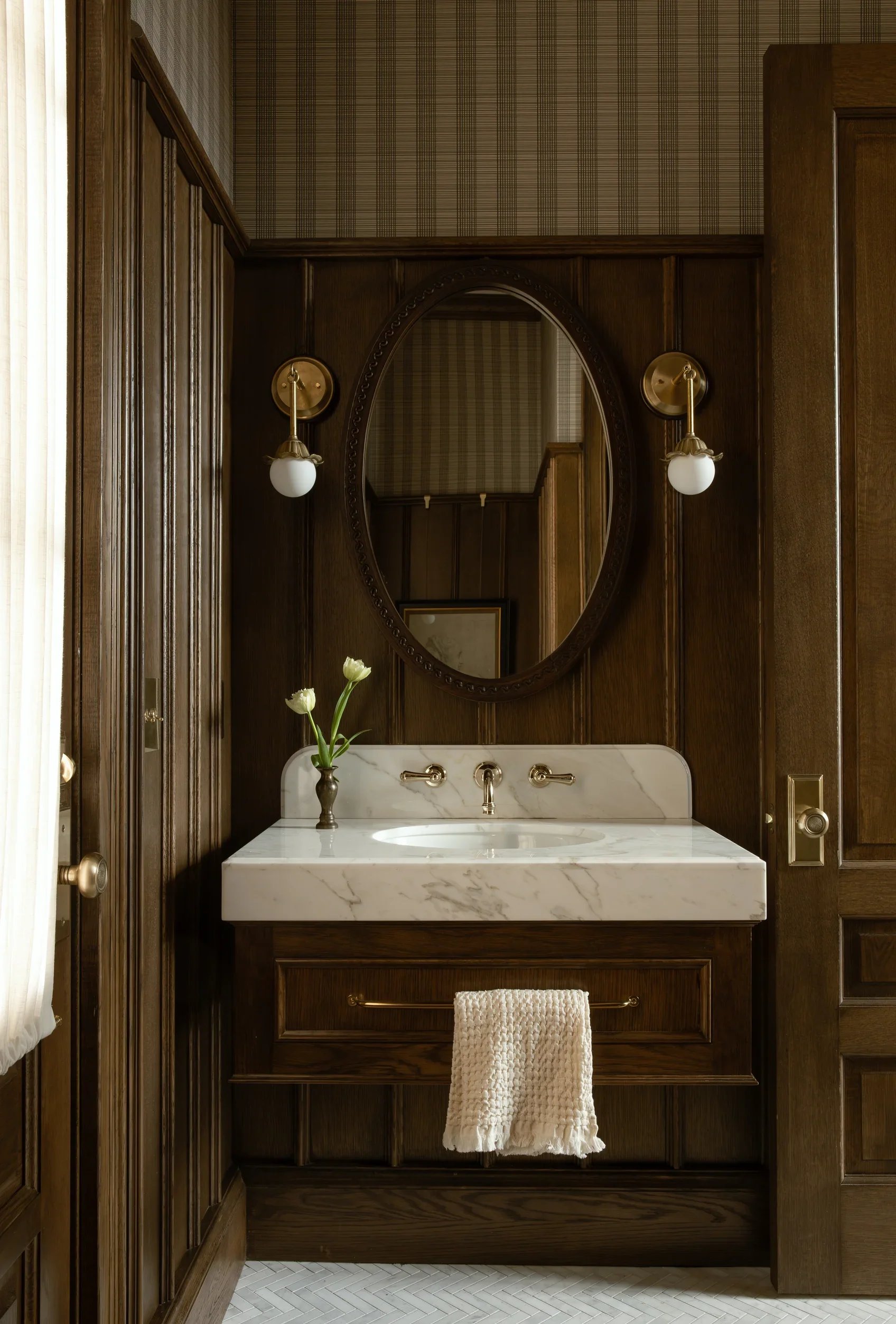
6. There Is No Universally Timeless Metal Finish
The same principle applies to plumbing fixtures and hardware.
People often ask which metal finish is the most timeless.
I do not think there is one.
It depends on the home.
For example, someone might tell you that antique brass knobs or handles are no longer “in.”
Put those same antique brass details into the right Spanish home and they can feel completely timeless.
Chrome might feel fantastic in another house. Polished nickel could be right for something more traditional. A very contemporary home may call for an entirely different approach.
Instead of asking, “Is this finish in style?” I would ask, “Does this finish make sense for this house?”
That is a much better test.
7. Be Careful With the Four-Inch Countertop Backsplash
This is a small detail, but it is one I notice all the time.
A homeowner purchases a prefabricated vanity countertop and it comes with a matching four-inch backsplash.
They install it because it came with the countertop.
Then they install tile above it.
Now you have countertop material running four inches up the wall, followed by another completely separate backsplash material.
You do not have to use a piece just because it came in the box.
If you are planning to tile the wall, in many cases I would skip the four-inch backsplash altogether and let the tile come cleanly down to the countertop.
It creates a more intentional look and eliminates another unnecessary visual break.
This is exactly the kind of small decision that can make the difference between a bathroom looking professionally designed and looking assembled from individual products.
Timeless Bathrooms Are About Cohesion
One of the reasons there is no universal formula for a timeless bathroom is that our local architecture varies so much.
In Palos Verdes, I work with everything from Spanish homes to Mid-Century architecture.
Redondo Beach has beautiful Craftsman influences.
Manhattan Beach has a strong coastal and Cape Cod vocabulary.
In Westchester, ranch-style homes create an entirely different starting point, while homes in Torrance and El Segundo bring their own architectural character and remodeling histories.
I would never want all of those bathrooms to look the same.
In fact, I think trying to make them look the same is exactly what makes a remodel eventually feel dated.
The better approach is to identify the architectural language of the home first, then make design decisions within that language.
That gives you much more freedom than it sounds like.
You can still introduce personality. You can still use color. You can still choose interesting stone or tile. You can still make the bathroom feel fresh and current.
The difference is that those decisions have a reason behind them.
Before You Choose the Tile, Look at the Whole House
When I design a bathroom, I am not just looking at the room itself.
I am looking at what came before it and what comes after it.
What does the hallway look like when you walk into the bathroom?
What style are the doors and baseboards?
What materials are being used elsewhere in the house?
What is the architectural style?
What are the undertones?
What elements are worth preserving?
Those questions should come before deciding which tile is trending.
Because the goal is not to make your bathroom look like it was remodeled in 2026.
The goal is to make it feel like it was always supposed to be there.
For homeowners remodeling in Palos Verdes, Manhattan Beach, Redondo Beach, Torrance, El Segundo, Westchester, and throughout the South Bay, that is what I consider truly timeless bathroom design.
