
Why the Best South Bay Remodels Require More Than a Finish Board
A Redondo Beach Fireplace That Started With a Simple Idea
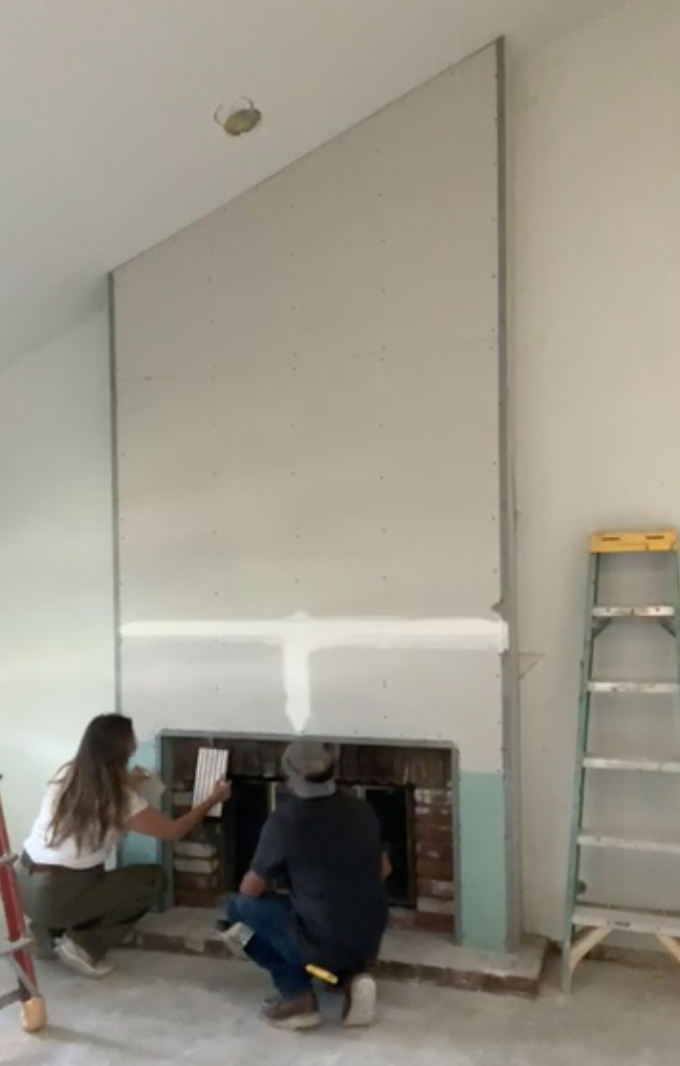
For a recent interior design project in Redondo Beach, the fireplace was in the first room you saw when you walked through the front door.
Originally, it was fairly simple: a brick fireplace with a wood mantel.
But the room itself had beautiful vaulted ceilings, and I wanted the fireplace to help emphasize them rather than visually stopping several feet above the floor.
So we reframed the fireplace all the way to the ceiling.
Immediately, that changed the architecture of the room. Your eye was drawn upward, the height of the space became much more noticeable, and the fireplace became a true focal point rather than something sitting against the wall.
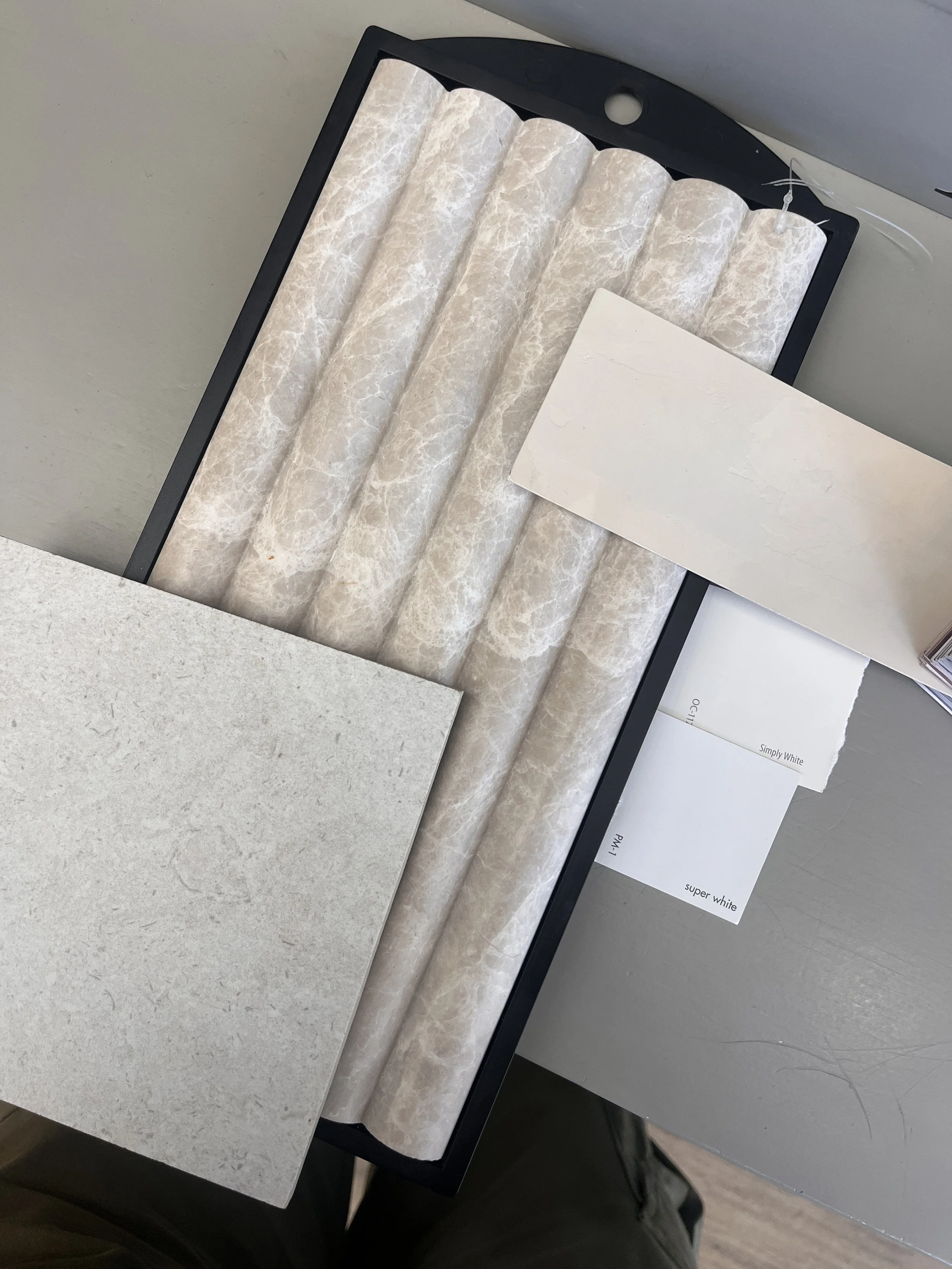
For the surround, I selected a rounded, ribbed stone that introduced texture and gave the fireplace a much more custom, high-end feeling. It also worked with the softer modern aesthetic we were creating throughout the home.
At the hearth, we used a flat porcelain finish for contrast and practicality, while Roman clay traveled up the face of the fireplace toward the vaulted ceiling.
Looking at the finished room, you might simply think, That's a beautiful fireplace.
But choosing the stone was only one decision in a much longer chain of decisions.
Every Finish Creates Another Decision
This is one of the parts of remodeling that homeowners don't always see.
Once you select a material, the design isn't finished.
In many ways, that's where another layer of design begins.
For this fireplace, selecting the ribbed stone meant we now needed to think about:
the grout color
the tile layout
where cuts would land
how the corners would be treated
the thickness of each material
how the stone would terminate around the firebox
how the hearth material would meet the surround
where the Roman clay would begin
how all three finishes would relate to the wall color
and how everything would look in the actual light of the room
Each decision affects the next one.
That's why I don't look at a finish selection in isolation.
Even the Grout Can Change the Entire Fireplace
Grout is a perfect example of a decision that can seem incredibly small until it's wrong.
With the ribbed stone on this fireplace, I didn't want the grout to become another visible design element.
I wanted the stone to read almost as one continuous textured surface.
That meant the grout had to blend seamlessly with the stone.
If we went too dark, you would suddenly see every break between the individual pieces.
Too light, and the exact same thing would happen in the opposite direction.
Instead of noticing the beautiful texture and movement of the stone, your eye would start noticing every joint and cut.
But the grout also couldn't be selected based on the stone alone.
We had to consider the wall color, the Roman clay, the natural and artificial light in the room, and how all of those colors would interact once they were installed together.
These are small choices.
They're also the choices that can make a very expensive material suddenly look inexpensive.
Why We Used Roman Clay Above the Fireplace
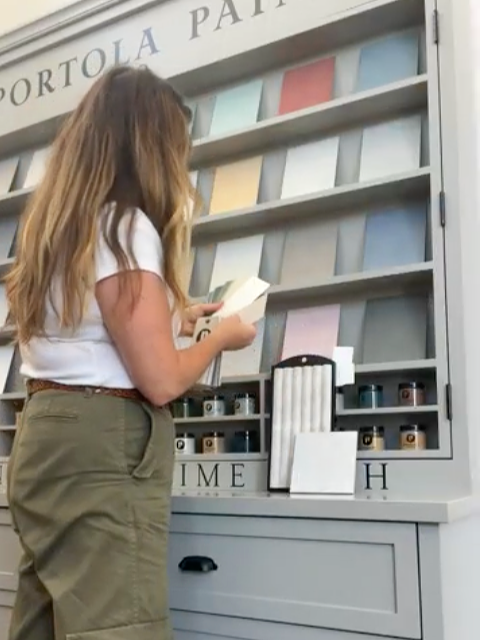
I love using Roman clay because it brings warmth into a room without necessarily introducing another strong color.
It has texture. It has movement. It reacts beautifully to light.
On this fireplace, it was especially effective because we were drawing the fireplace all the way up into a high vaulted ceiling.
A flat painted wall wouldn't have created the same depth.
But again, selecting "Roman clay" wasn't enough.
The exact color needed to work with both the wall paint and the stone below it so the fireplace felt like one composition rather than three unrelated materials stacked on top of one another.
The transition needed to feel intentional.
When those colors are right, most people won't consciously notice why they work.
They will simply feel that the room is cohesive.
The Detail You Don't See Is Often the Most Important One
One of the biggest discussions on this project happened once we were actually on site.
There were multiple ways the materials could have been installed around the firebox.
By standing there with the installer and looking at the fireplace in person, I was able to specify that the ribbed stone should travel vertically along the sides of the surround while the porcelain hearth material remained only below the firebox.
It gave us a cleaner finished composition.
We also worked through the mitered edges around the fireplace, stone placement, alignment, cuts and transitions.
These aren't necessarily decisions that translate well when someone simply hands a contractor a finish board and says, "Here's the tile."
A finish board tells you what we're using.
It doesn't always explain exactly how I want it installed.
And how a material is installed can be just as important as the material itself.
This Is Why Designers Need to Understand Construction
Interior design during a remodel isn't just about knowing what looks good.
I need to understand how something is going to be built so I can communicate what needs to happen for it to look right when it's finished.
When I'm speaking with a tile installer, electrician, plumber or contractor, I'm thinking ahead.
What happens at this edge?
Where does this terminate?
What's behind this wall?
If we put this here now, what happens when the next material gets installed?
Will these two finished surfaces actually align?
It's much easier to solve those questions before something is installed than after it is finished.
That communication between the designer and contractor is a major part of my role during construction.
Why I Visit a Remodel at Specific Construction Milestones
For my South Bay interior design projects, I'm not necessarily standing on a construction site every day.
But there are certain moments when being there matters.
I typically want to review a project around important milestones such as electrical and plumbing placement before drywall, before tile installation, and during lighting installation.
Those are the points where seemingly small decisions can have a very visible impact later.
Once the drywall is closed, the tile is installed or the holes for lighting have been cut, changing something becomes much more complicated—and usually more expensive.
The goal is to catch those details while they're still easy to refine.
Beautiful Materials Don't Automatically Create a Beautiful Remodel
I've walked into homes where the individual materials were beautiful and expensive, but something still felt off.
Most of the time, the problem wasn't the tile itself.
It was the finish work.
Tile layout.
Awkward cuts.
Edges that weren't considered.
Materials terminating in strange places.
Misaligned fixtures.
Transitions that nobody decided how to handle until the installer was already standing there.
Usually, it's something that someone either didn't think about or didn't know they needed to think about.
That's the difference between simply selecting finishes and actually designing a finished space.
South Bay Homes Often Make These Details Even More Important
No two remodels are exactly alike, and that is especially true throughout the South Bay.
Homes in Redondo Beach, Manhattan Beach, Hermosa Beach, Torrance and the Palos Verdes Peninsula can have completely different architecture, ceiling heights, previous remodels and existing conditions.
Sometimes you're working with a home that has evolved through several renovations.
Sometimes you're trying to modernize the space while still respecting its original character.
And sometimes, like this Redondo Beach home, one architectural element presents an opportunity to completely change how you experience the room.
That means the design can't exist only on a mood board.
It has to respond to what is actually happening inside the house.
So, What Does an Interior Designer Actually Do During a Remodel?
Selecting materials is certainly part of the job.
But it's only part of it.
A full-service interior designer is also considering how those materials relate to one another, how they're installed, what decisions need to happen before construction moves forward, and how the original design intent makes it all the way through to the finished room.
That often means standing on a construction site talking through a detail that the homeowner may never know existed.
And that's exactly how it should be.
Because when the project is finished, you shouldn't walk into the room and notice the grout joint or spend time wondering why a tile edge ended where it did.
You should walk in and think:
This feels beautiful.
The difference between a room that simply has beautiful materials and one that feels professionally designed is often found in the small choices that could have easily been brushed over.
Those are the details I pay attention to.
And they're often the details that make the biggest difference.
Planning a South Bay Remodel?
Michelle Accetta Home provides full-service interior design for remodels, new construction and whole-home furnishings throughout the South Bay, including Redondo Beach, Manhattan Beach, Hermosa Beach, Torrance and the Palos Verdes Peninsula.
If you're planning a remodel and want a designer involved not only in selecting the finishes, but in making sure those decisions are carried through construction and installation, get in touch to discuss your project.
