
How to Make Your Home Feel Calmer: 4 Design Ideas for South Bay Families
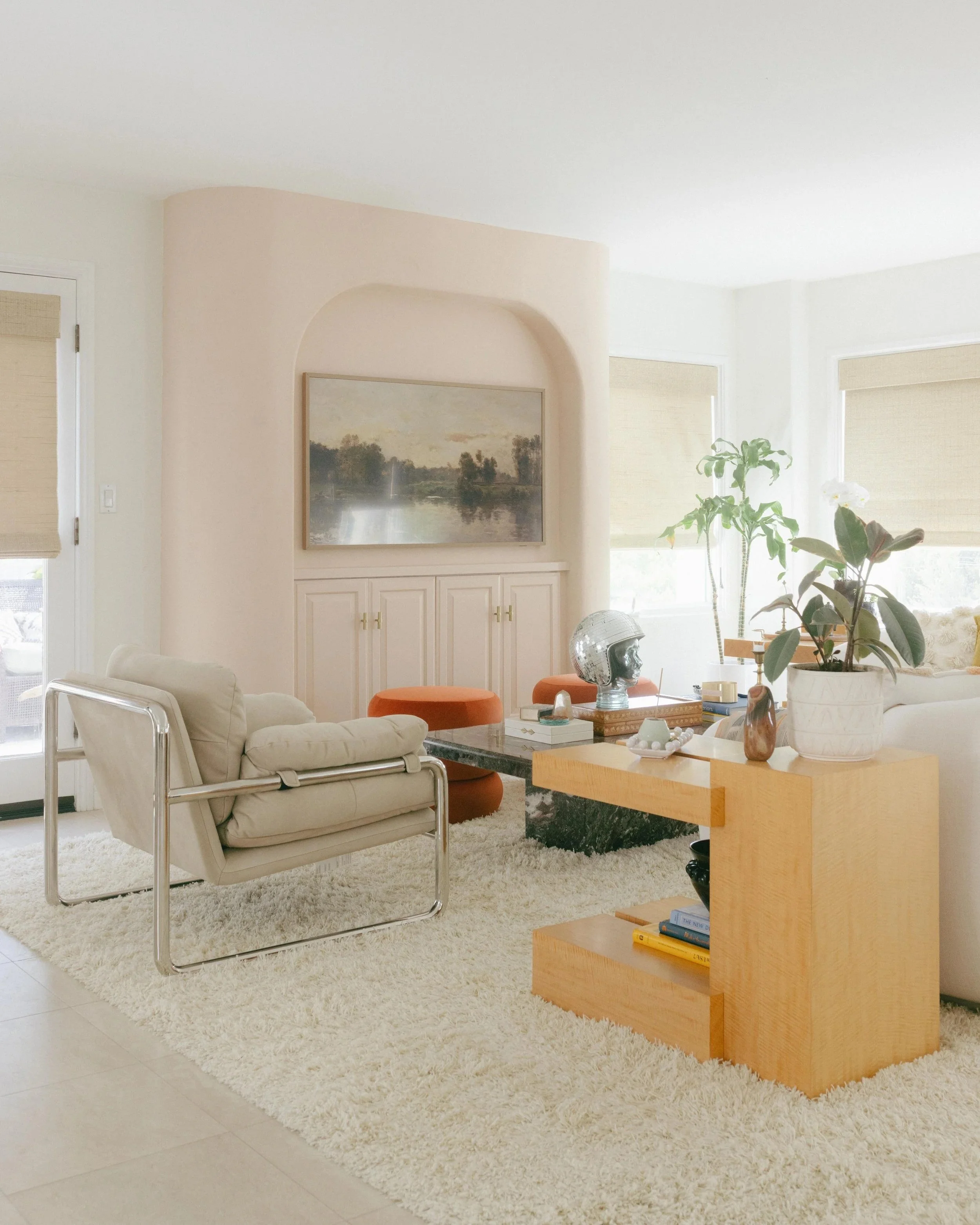
A room can be tidy and still feel busy…
Toys visible through cabinet doors, shelves filled with small objects, and everyday essentials without a dedicated place can leave your eye with nowhere to rest.
As the principal designer at Michelle Accetta Home, a Los Angeles luxury interior design firm, I work with families throughout Manhattan Beach, Redondo Beach, El Segundo, and Palos Verdes. Many have young children and want beautiful homes that also work for their daily lives.
Backpacks, sports equipment, toys, and workout gear are all part of that life. When I design a family home, I consider where those items will go just as carefully as I consider the furniture, artwork, and finishes.
Here are four ways I help create spaces that feel calmer and are easier to enjoy.
1. Choose Closed Storage to Reduce Visual Clutter
Open shelving can be beautiful, but everything on it becomes part of the room’s visual landscape. For a busy family, that can mean toys, books, electronics, and miscellaneous items competing for attention.
Closed storage gives you more control over what you see. In living rooms, I often look for cabinets and furniture with doors. In kitchens, solid cabinet fronts can create a quieter backdrop than glass doors that reveal every dish and container. With built-ins, I consider a balance of enclosed storage and open areas for a few thoughtfully selected objects.
On one project in Palos Verdes, my clients had an existing television built-in with glass-front cabinets beneath the TV. The cabinets were filled with children’s toys. Everything had been put away, but you could still see it all, making the room’s main focal point feel chaotic.
My solution was to conceal the glass with rattan. It worked with the home’s warm coastal aesthetic and hid the contents while adding texture.
That relatively small change made a big difference in how calm the room felt. The family could keep using the storage they already had, and the toys no longer drew attention every time someone looked toward the television.
Start here: Look at the storage around your room’s main focal point. Would solid doors or an appropriate decorative insert help quiet the view?
2. Give Everyday Items a Dedicated Home
Closed storage works best when it is planned around what your family actually needs to put away.
When I work with clients, I want the items we intentionally leave on display to contribute to the room’s beauty. For everything else, from children’s toys to the vacuum cleaner, we plan a place.
That starts with understanding routines. Where do backpacks land after school? Where do shoes collect? Where do you use the workout equipment, and how easily can it be stored afterward?
For South Bay families, those conversations might also include beach bags, sports gear, and the items that travel between home, school, and activities. Storage should fit those belongings and sit in a location that makes putting them away convenient.
A cabinet near the entry may be more useful for backpacks than a closet across the house. Living room toy storage should be easy to reach when it is time to clean up. Larger household equipment needs space that accommodates its actual size.
Start here: Choose one category that repeatedly ends up on the floor or countertop. Give it a specific, convenient place before buying more storage furniture.
3. Use Artwork to Create a Place for the Eye to Rest
Artwork plays a big role in how a room feels. A thoughtfully chosen piece can draw your attention, bring the palette together, and create a focal point you enjoy looking at.
The two things I pay particular attention to are scale and color. The artwork should feel appropriately sized for the wall and surrounding furniture. Its colors should work with the room’s overall palette to create cohesion.
Calming art does not have to be a neutral landscape. Art is personal, and I want clients to feel a connection to what we select.
The process can look different for each project. Sometimes we visit a gallery together. Sometimes I select the pieces. Other times, we collaborate, with me guiding size and color while the client explores what speaks to them.
Start here: Before choosing artwork, consider the wall, the furniture beneath it, and the colors already in the room. Then look for a piece you would enjoy seeing every day.
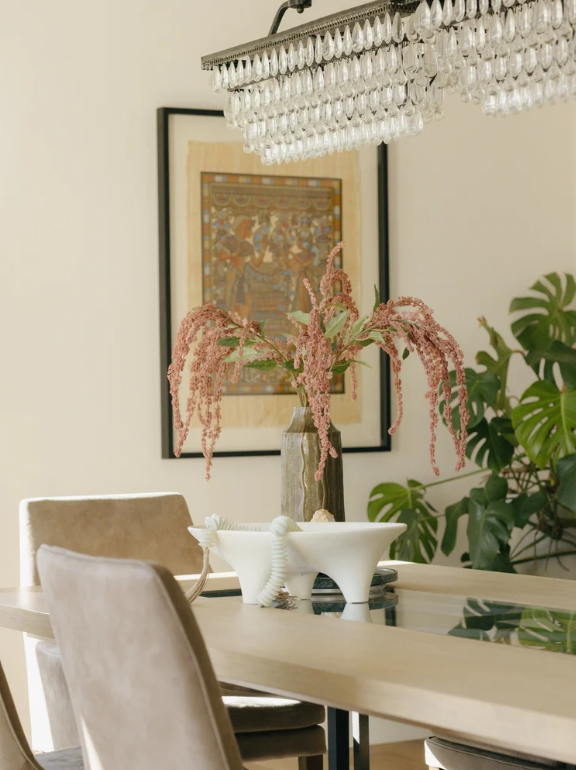
4. Bring Nature Into the Room With a Live Plant
In most of my clients’ homes, I install at least one live tree. I love the way it visually grounds a space and brings a natural element into the design.
A tree can soften a corner, add height, and balance the straight lines of cabinetry and furniture. One substantial plant can also create a clear, intentional moment without adding lots of small decorative objects.
The right choice depends on the room’s light, available space, and the care the family can realistically provide. I consider the planter part of the design, too, choosing a size and finish that work with the surrounding furnishings.
Start here: Consider one spot where a live plant could add softness without interrupting movement through the room. Choose a plant suited to that location and your household.
Design a Home That Supports Your Family
A calmer home starts with thoughtful decisions about what you see, what you display, and where everyday belongings go.
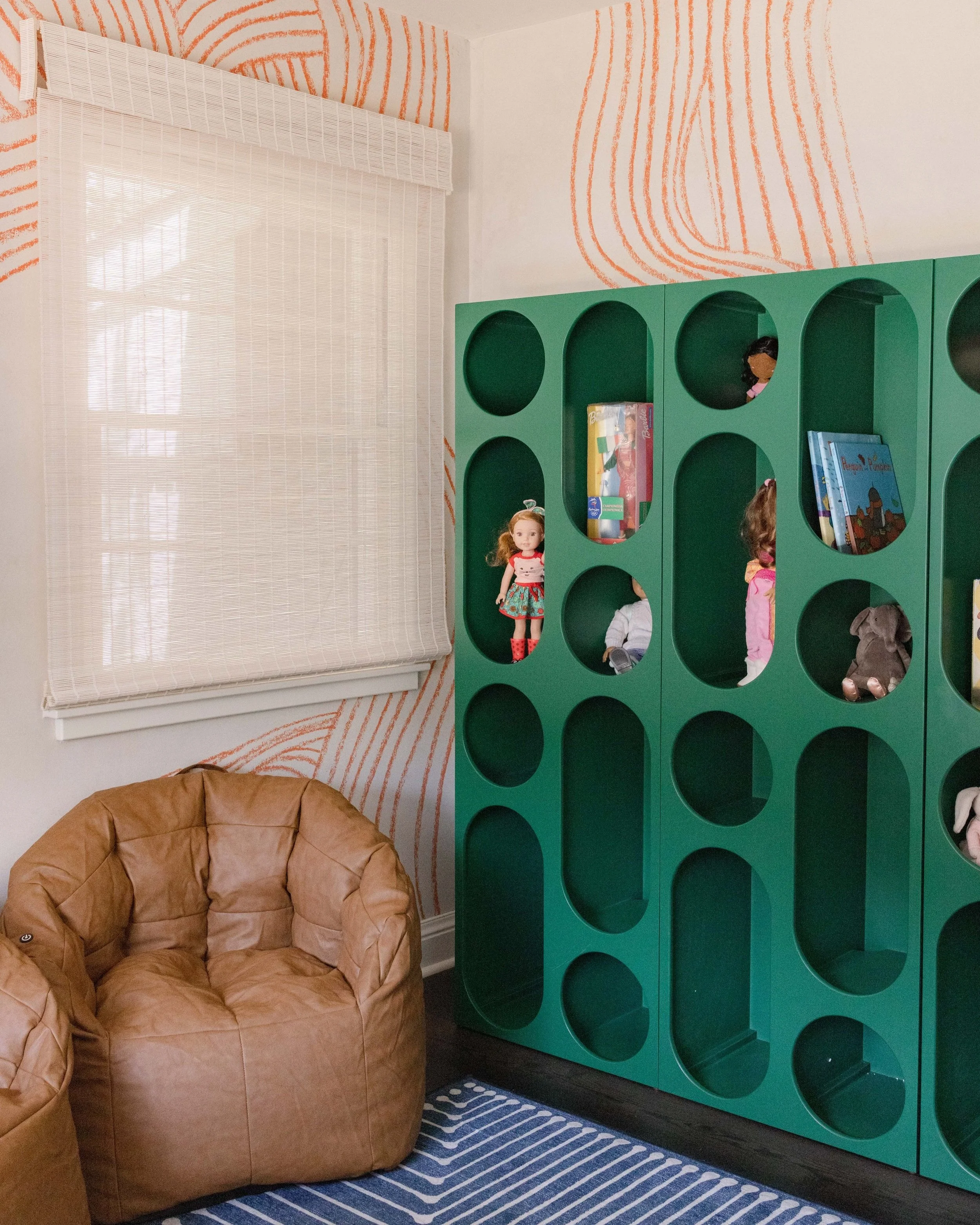
For some rooms, a change to existing cabinetry can make a meaningful difference. For others, creating that sense of ease takes a more complete plan for storage, furniture, artwork, and the way the family uses the space.
At Michelle Accetta Home, I help families in Manhattan Beach, Redondo Beach, El Segundo, and Palos Verdes create beautiful, cohesive interiors that support everyday life.
If you are ready to create a home that feels calmer and works better for your family, book a consultation to discuss your full-service interior design project.
